Author: ABD17

  • 🤯 7 Mind-BlowingFreakonomics Facts

    The famous book Freakonomics shows that the world works in strange and surprising ways. Using data and economics, authors Steven D. Levitt and Stephen J. Dubner reveal hidden truths about everyday life.

    💰Fact #1: Drug Dealers Often Live With Their Parents

    Contrary to movies, many low-level drug dealers earn very little money. Because of this, many still live with their parents while hoping to climb the hierarchy.

    🎓Fact #2: Some Teachers Cheated on Tests

    In schools where teacher bonuses depended on student performance, researchers found suspicious answer patterns suggesting teachers changed answers.

    🥋 Fact #3: Even Sumo Wrestlers Might Cheat

    Data analysis of professional sumo matches suggested that some wrestlers intentionally lost matches to help another wrestler avoid demotion.

    👶 Fact #4: Baby Names Don’t Decide Success

    Parents spend time choosing unique names, but research shows family background and opportunities influence success much more.

    📉 Fact #5: Crime Dropped for Unexpected Reasons

    Crime rates in the United States dropped sharply in the 1990s. Some explanations were surprising and challenged traditional theories.

    🧠 Fact #6: Incentives Control Behavior

    One major idea in Freakonomics is that people respond strongly to incentives — money, rewards, reputation, or fear of punishment.

    📊 Fact #7: Economics Explains Everyday Life

    Economics can explain many surprising things: crime trends, parenting choices, sports behavior, and even social patterns.

    🚀 Final Thought

    The biggest message of Freakonomics is simple: the world is full of hidden patterns. When we look at data and incentives, we discover surprising truths about human behavior.
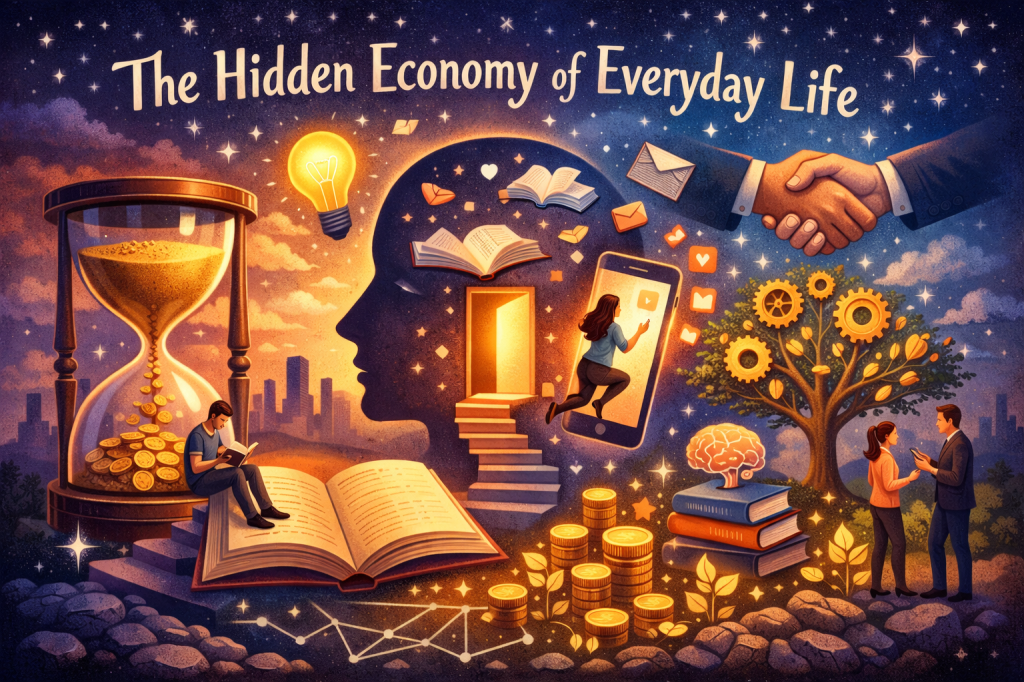

  • 🌌 The Hidden Economy of Everyday Life

    Not all wealth is money… some of it is invisible 👀

    ⏳ 1. Time is Your Real Currency

    We chase money, but spend time carelessly. Every hour you give to something is an investment—even scrolling 📱

    🧠 2. Attention is the New Gold

    Companies fight for your attention because it’s valuable. Where you focus daily shapes your future.

    🤝 3. Relationships = Hidden Wealth

    A good connection can open doors that money cannot. Networking is not just business—it’s life value.

    📚 4. Knowledge Compounds Like Money

    Learning one skill leads to another. Over time, knowledge creates opportunities you never expected 📈

    ⚡ 5. Energy is Limited

    Your daily energy decides productivity. Protect it like money—don’t waste it on things that don’t matter.

    🧠 Fun Insight

    • 📱 Social media platforms earn from your attention
    • 💡 One idea can be worth more than years of salary
    • 🤝 Strong relationships often create unexpected success

    ✨ Final Thought

    You are richer than you think. Your time, focus, and energy are assets. Use them wisely, and money will follow 💸

    Invest in what money can’t buy 💫

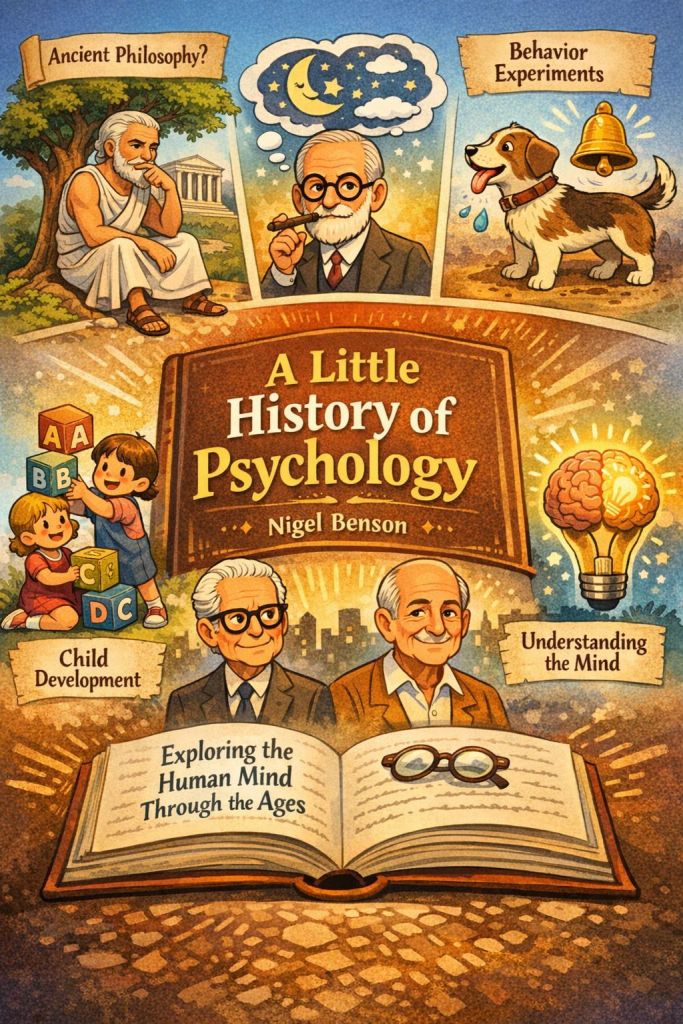
  • 🧠 A Little History of Psychology — Understanding the Human Mind

    Human behavior has always fascinated us. Why do we think the way we do? Why do emotions control many of our decisions? The book A Little History of Psychology explores these questions by tracing the development of psychology from ancient philosophy to modern science.

    📚 About the Book

    Written by Nigel Benson, this book presents psychology in a simple and engaging way. It explains how the study of the human mind evolved over centuries through the ideas of great thinkers and scientists.

    Instead of complex academic explanations, the book uses stories, historical events, and famous experiments to make psychology easy to understand.

    🌍 The Journey of Psychology

    The book takes readers through the major milestones in psychology:

    • 🏛️ Ancient philosophers asking questions about the mind and behavior
    • 🧪 Early scientific experiments about memory and perception
    • 🧠 The birth of modern psychology laboratories
    • 💭 The study of unconscious thoughts and emotions
    • 📊 Modern research into human behavior and decision-making

    Through these stages, psychology slowly transformed from philosophy into a scientific discipline.

    👨‍🔬 Famous Thinkers Featured

    The book introduces many influential figures in psychology, including:

    • 🧠 Sigmund Freud – Founder of psychoanalysis
    • 🐶 Ivan Pavlov – Famous for classical conditioning experiments
    • 🧪 B. F. Skinner – Pioneer of behaviorism
    • 👶 Jean Piaget – Researcher on child development
    • 🧑‍🤝‍🧑 Carl Rogers – Advocate of humanistic psychology

    Each of these thinkers contributed new ideas about how humans think, feel, and behave.

    💡 Why This Book Is Popular

    • 📖 Easy to read for beginners
    • 🧠 Explains complex ideas in simple language
    • 📚 Covers the entire history of psychology
    • 🌎 Shows how psychology affects everyday life

    Whether you’re a student, reader, or simply curious about human behavior, this book provides a clear introduction to psychology.

    🔥 Fun Fact

    The word “psychology” comes from the Greek words psyche (soul or mind) and logos (study). Together they mean “the study of the mind.”

    ✨ Final Thought

    Understanding psychology helps us understand people — and ourselves. Books like A Little History of Psychology show that the journey to understand the human mind has taken centuries, and it continues to evolve today.

    🧠 “To understand the world, first understand the mind.”

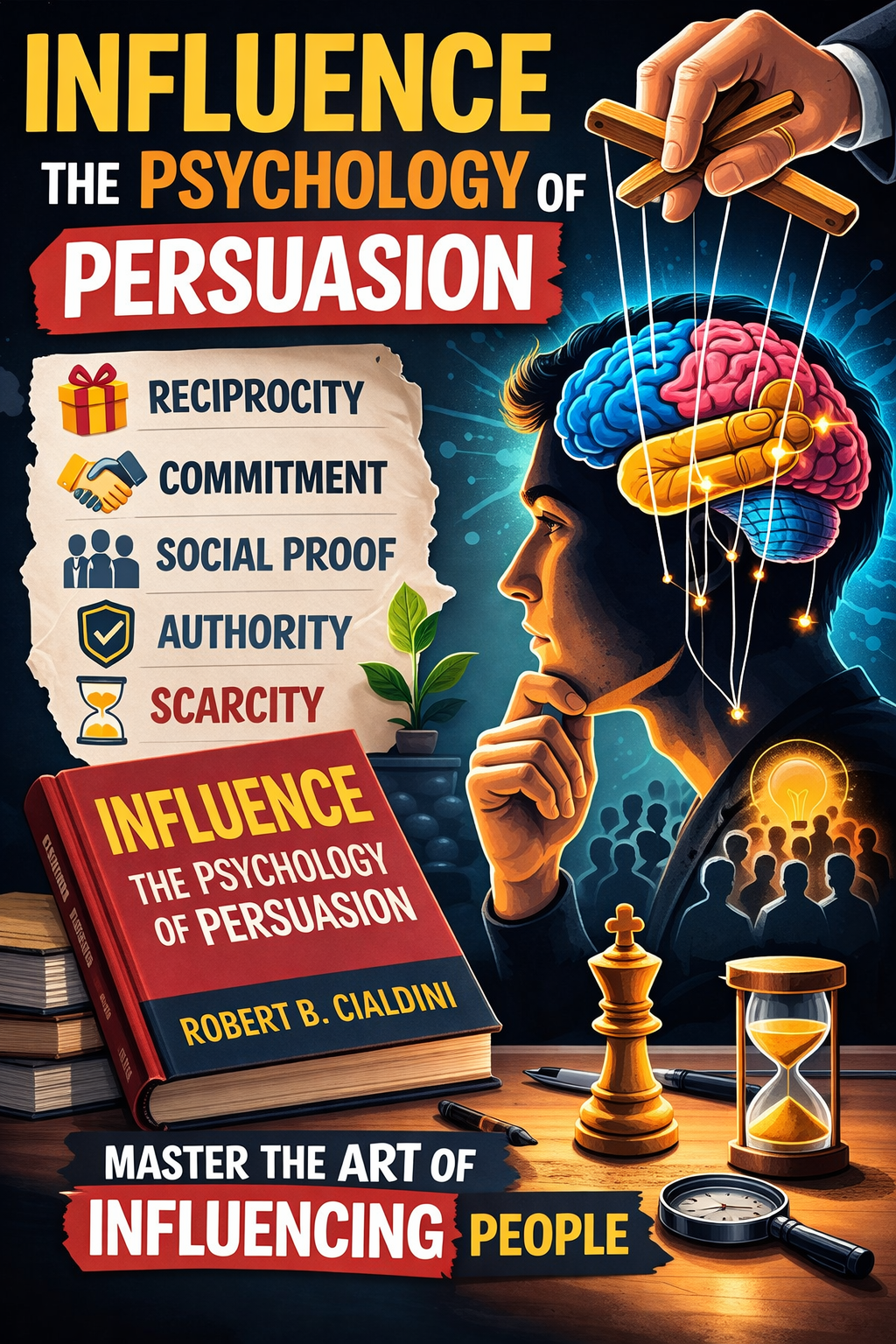
  • 🧠 Influence: The Psychology of Persuasion

    Why do people say “yes”? Why do we sometimes buy things we don’t really need?

    The famous book Influence: The Psychology of Persuasion explains the hidden psychology behind decision-making and persuasion.

    The author discovered that most persuasion techniques follow a few powerful psychological principles. These principles are used in marketing, negotiation, business, and everyday life.

    1️⃣ Reciprocity – People Return Favors

    When someone gives us something, we naturally feel the need to return the favor.

    • Free samples in supermarkets
    • Free trials from apps
    • Small gifts from brands

    These create a psychological pressure to give something back.

    2️⃣ Commitment & Consistency

    Once people commit to something, they want to stay consistent with that decision.

    • Signing a small petition
    • Agreeing to a small request
    • Public commitments

    Small commitments often lead to bigger decisions later.

    3️⃣ Social Proof – Following the Crowd

    People often look at what others are doing before making a decision.

    • Restaurant queues
    • Product reviews
    • Trending social media posts

    If many people choose something, we assume it must be good.

    4️⃣ Authority – Trusting Experts

    People tend to follow advice from experts, doctors, or professionals.

    • Doctors in advertisements
    • Financial experts on TV
    • Professional certifications

    5️⃣ Scarcity – Limited Means Valuable

    When something is rare or limited, people want it more.

    • “Only 3 items left!”
    • “Limited time offer”
    • “Flash sale today”

    Scarcity creates urgency and faster decisions.

    🤯 Fun Fact

    Many global companies use these persuasion principles in marketing campaigns.

    Even simple things like “best seller” labels are based on psychology.

    💡 Key Lesson

    Understanding persuasion helps you in two ways:

    • Become better at influencing others
    • Avoid being manipulated by marketing tricks

    When you understand influence, you understand how decisions are really made. 🧠

  • ⚡ The Power of Acting Fast

    Ever wondered why some people always seem to get the best opportunities? It’s simple:

    “The faster you act, the more you gain.”

    🚀 Why Acting Fast Matters

    • Opportunities vanish quickly: Did you know 70% of business deals fail because people hesitate too long?
    • Momentum creates success: Quick action builds confidence and leads to a chain of wins.
    • Confidence grows: Taking fast decisions trains your instincts for future opportunities.

    💡 Fun Facts About Speed & Success

    • Amazon’s Jeff Bezos: Believes in “Speed over perfection.” Many early decisions were rough but fast, leading to massive growth.
    • 🚀 NASA trivia: During Apollo 13, quick thinking and fast action saved the astronauts’ lives.
    • 📈 Stock market fact: Traders who act within the first few seconds of breaking news often make significantly higher gains.

    🔥 Tips to Be Fast Without Losing Quality

    1. Prioritize important tasks first and act immediately.
    2. Trust your knowledge and avoid overthinking.
    3. Break big tasks into smaller steps for quicker wins.
    4. Learn from mistakes fast and move forward confidently.

    “Speed plus focus is a game-changer. Move fast, see more, and gain more!” ⚡

  • 🏰 Did you know Moats!

    A moat is like a castle’s shield for your business — it keeps competitors out and profits safe! Here are some fun facts you might not know:

    💡 Did You Know?

    • 🟢 Apple’s brand moat: People camp outside stores for new products — that’s loyalty in action!
    • 💰 Walmart’s cost advantage: They sell over 1 billion products weekly worldwide!
    • 🌐 Network effect: Facebook has 3+ billion monthly users — the more people join, the stronger it gets.
    • 🔒 Switching costs: Companies using Microsoft Office are reluctant to switch; it saves them months of training.
    • 🧠 Patents protect Tesla: Their electric car tech has over 1,500 patents worldwide.
    • 📦 Amazon’s logistics moat: Their advanced warehouse network allows same-day delivery — competitors can’t match the speed easily.
    • 🖥️ Google’s search moat: Over 90% of people trust Google search results, making it extremely hard for rivals to take market share.
    • 🎵 Spotify’s playlist moat: Personalized playlists keep users hooked, making it difficult for competitors to lure them away.
    • 🏦 Visa & Mastercard’s network: Billions of transactions worldwide create a digital payments moat — new entrants struggle to gain trust.
    • 🛡️ Coca-Cola’s secret formula: The famous recipe is an intellectual property moat that has lasted over 130 years!

    🏰 Build your moat, protect your profits, and make business fun! 🚀

  • Facts Around the World

    Global wealth isn’t just about billionaires and skyscrapers — there are some truly mind-blowing facts! Did you know that a huge chunk of the world’s wealth is hidden offshore in secret accounts, trusts, and shell companies? Estimates suggest it could be anywhere from $5.6 trillion to $32 trillion! 🌍

    💡 Fun & Surprising Facts

    • The richest 1% owns nearly half of all global wealth, while the bottom 50% collectively own barely 1.6%! 😲
    • Even though digital payments are booming, cash demand has grown globally over the last 20 years — people still love holding money! 💵
    • Most of the ultra-rich’s wealth isn’t cash — it’s tied up in stocks, companies, real estate, and rare collectibles like art and yachts. 🖼️🚤
    • The combined value of all gold ever mined (~$12 trillion) is smaller than the wealth of the top 10 richest people! 🥇
    • There’s more money in the world than there are goods — economists call this the “money illusion.” 💸
    • Some billionaires own entire islands or countries — yes, you can technically buy your own private nation! 🏝️

    ✨ Why This Matters

    Knowing where money really is — who controls it and how it’s stored — helps us understand global power, markets, and economic trends. Whether it’s gold, cryptocurrencies, stocks, or hidden offshore wealth, following the money reveals the world’s hidden dynamics.

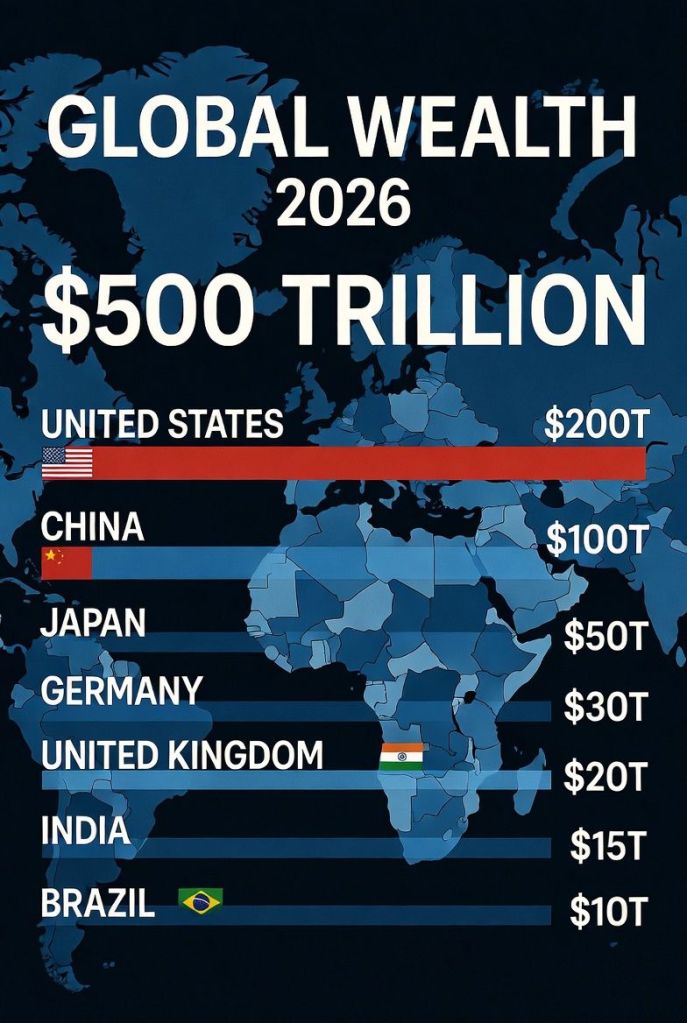
  • 🌍💰 Global Wealth in 2026: Who Really Owns the World?

    The world is swimming in money — but not everyone is in the pool.

    In 2026, total global wealth is estimated at $450–500 trillion. That includes real estate 🏠, stocks 📈, gold 🪙, businesses 🏢, and cash 💵.


    🌎 Who Holds the Most Wealth?

    • 🇺🇸 United States – The Money Giant 💪
      Largest economy, biggest stock market, most billionaires.
    • 🇨🇳 China – The Fast Climber 🚀
      Highest money supply (M2), massive real estate ownership.
    • 🇪🇺 European Union – Old Money Power 🏦
      Strong banking systems and historic wealth concentration.

    📊 Where Is Most Wealth Stored?

    • 🏠 Real Estate – ~45%
    • 📈 Stocks & Investments – ~30%
    • 🏦 Cash & Deposits – ~15%
    • 🪙 Gold & Others – ~10%

    👉 Property is still king. Not crypto. Not cash. Land wins.


    🏆 Rich vs Poor Reality

    • Top 1% own nearly 45–50% of global wealth.
    • Bottom 50% own less than 2%.

    Yes… wealth inequality is real.


    🤯 Fun Wealth Facts

    • 💎 2,800+ billionaires worldwide.
    • 🌆 New York has more millionaires than most countries.
    • 🪙 Central banks hold trillions worth of gold.
    • 📱 One viral tech company can create 100+ millionaires in a year.
    • 🏠 Most millionaires are built through real estate, not salary.

    📈 What’s Growing Fast in 2026?

    • 🤖 AI companies
    • 🌱 Green energy
    • 🇮🇳 Emerging markets like India
    • 💳 Digital assets & fintech

    💡 Final Thought

    Money isn’t disappearing. It’s moving.

  • 💰 Money & Wealth Mindset: Build Rich Habits, Not Just Income

    Money is not magic. Wealth is not luck. Real wealth is built through mindset, discipline, and long‑term thinking. If you master how money works, money will start working for you.


    🔥 The Truth About Wealth

    • Wealth is created, not chased
    • High income without discipline still leads to poverty
    • Small daily habits decide your financial future
    💡 Fun Fact: Most millionaires became wealthy through consistent investing and self‑control, not lottery wins or overnight success.

    🧠 Billionaire Mindset Shift

    Rich people ask: “How can this money grow?”
    Poor thinking asks: “How can I spend this?”

    • Build assets before lifestyle
    • Invest before expenses
    • Think years ahead, not weekends

    🌱 Spiritual Side of Wealth

    When gratitude meets discipline, abundance follows. Wealth flows to those who respect money, not fear it.

    ✨ Wealth Affirmation:
    “I respect money. I invest wisely. I attract opportunities that multiply my income.”

    🚀 Simple Habits That Create Wealth

    • Track every rupee or dirham
    • Invest monthly, even small amounts
    • Avoid unnecessary debt
    • Upgrade skills, not just gadgets

    📌 Final Thought

    Wealth is not about getting rich fast.
    It’s about building freedom forever.

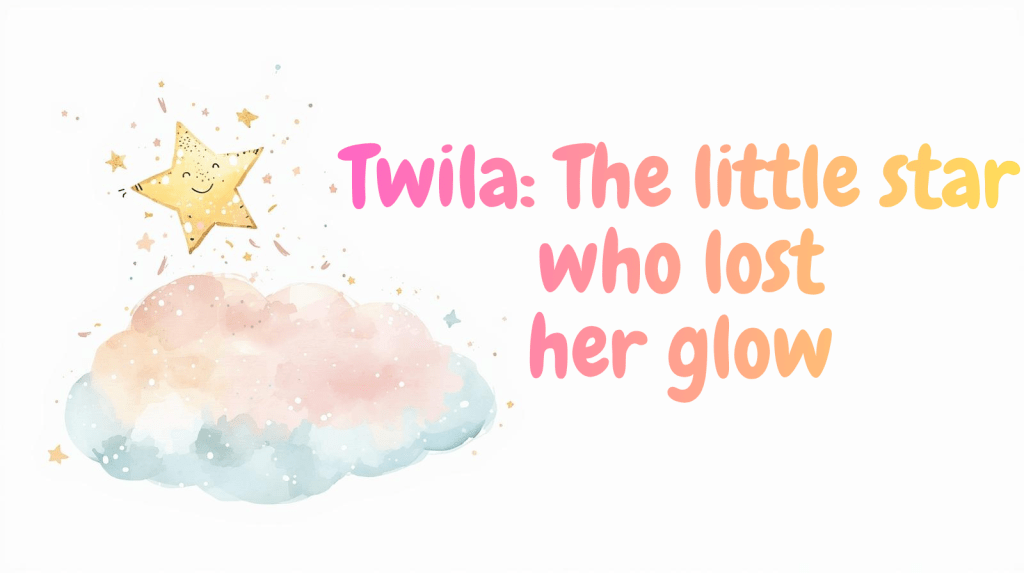
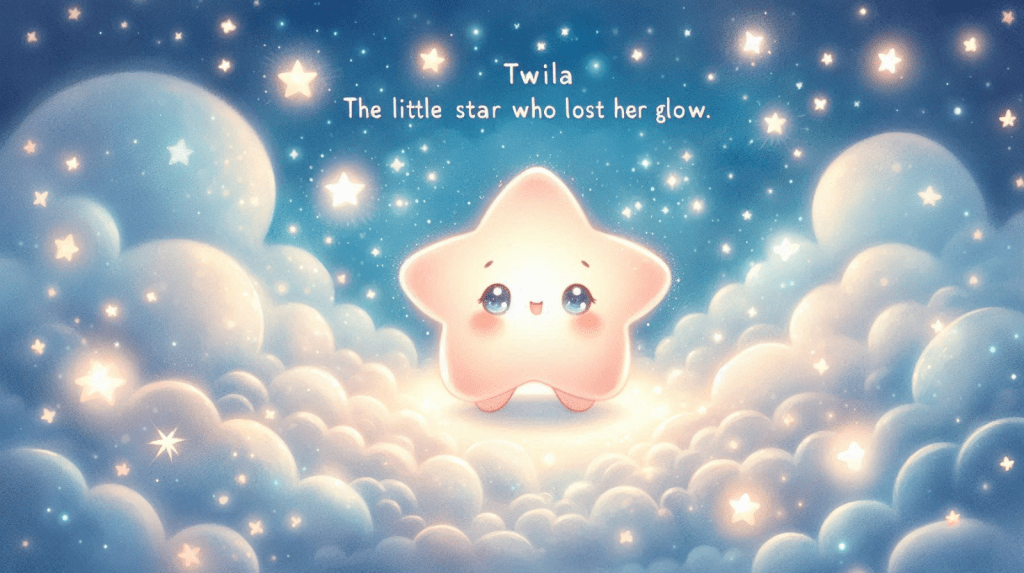
  • Twila: The Little Star Who Found Her Shine Again


    “Twila” is a heart-warming bedtime story about a tiny star who suddenly loses her glow and journeys across forests, fields, and rivers to find it again. Through helping others and discovering joy, Twila learns that true brightness comes from kindness and happiness. Here’s the full story in a clean, easy-reading format for kids.

    Twila was a cheerful little star who twinkled brightly every night. High above the quiet houses, children often looked up and smiled at her warm glow.

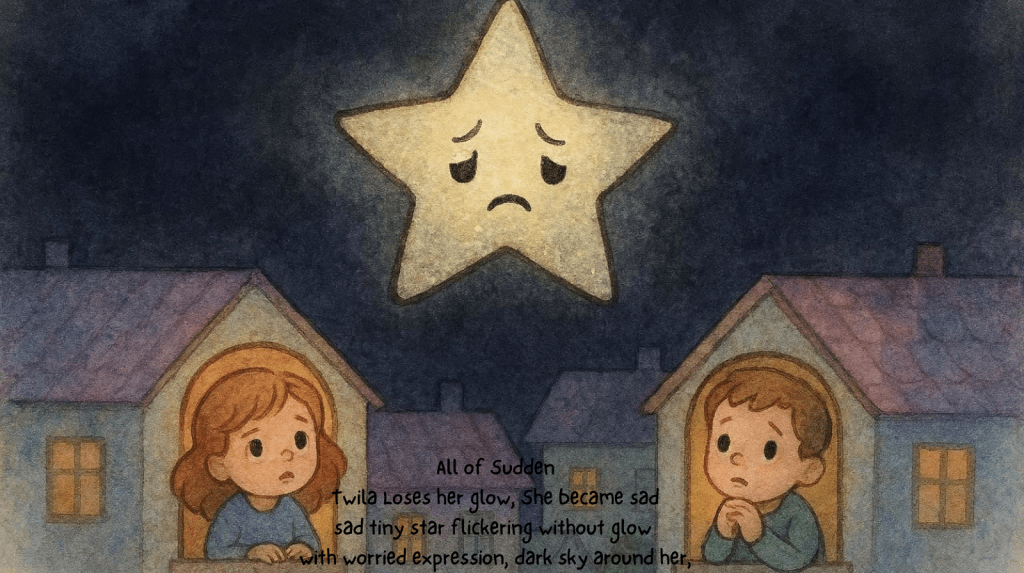
    One evening, something strange happened—Twila’s light began to fade. Her glow flickered softly, and soon she was left dim and dull. The children wondered why their favorite star looked so sad.

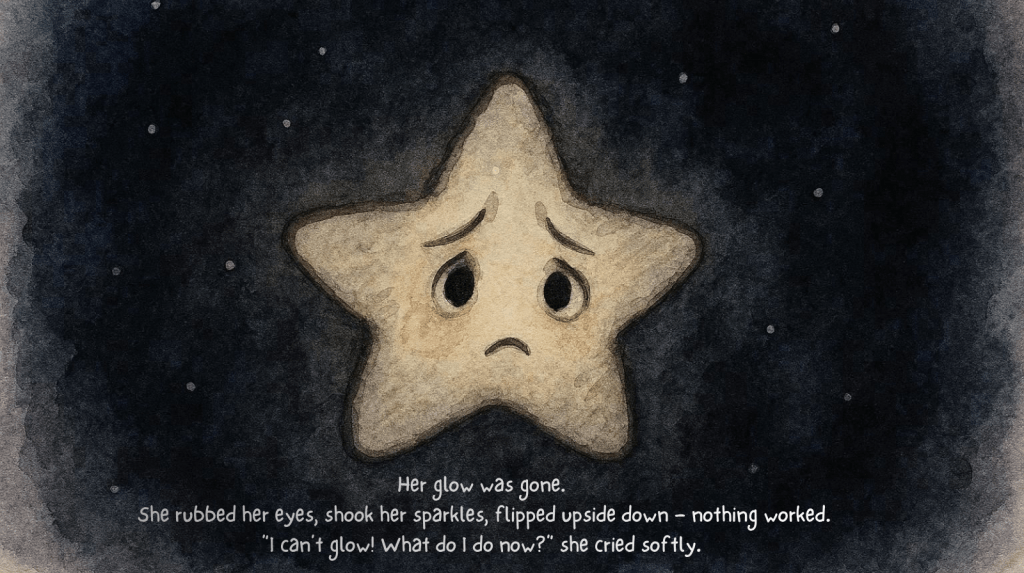
    Twila tried everything she knew—shaking her sparkles, blinking harder, even flipping upside down. But nothing brought her glow back. “What do I do now?” she whispered sadly into the dark sky.

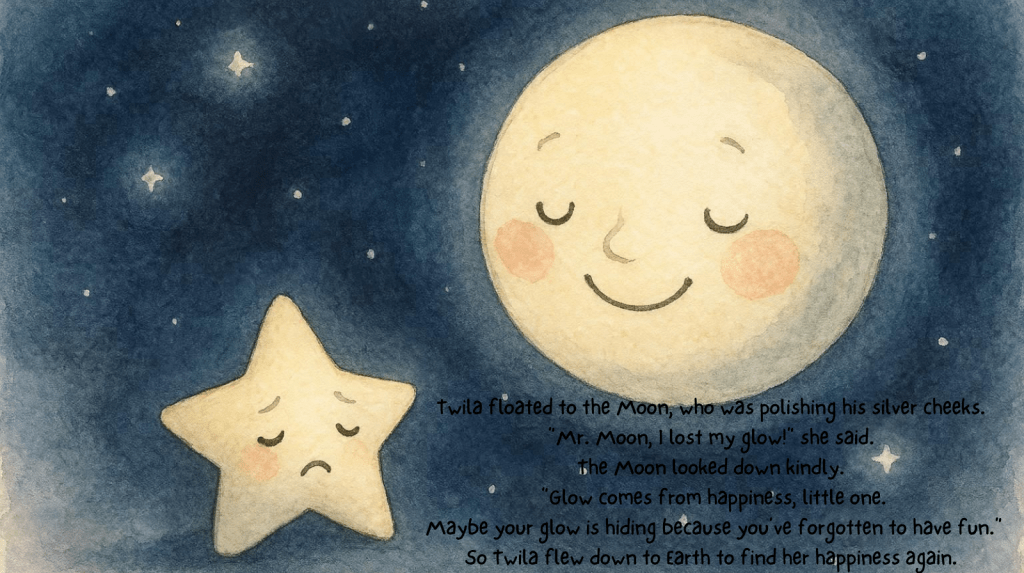
    Twila floated to the Moon, who was gently polishing his silver face. “Mr. Moon, I’ve lost my glow,” she said.
    The Moon smiled kindly. “Little star, glow comes from happiness. Maybe your light is hiding because you’ve forgotten how to have fun.”

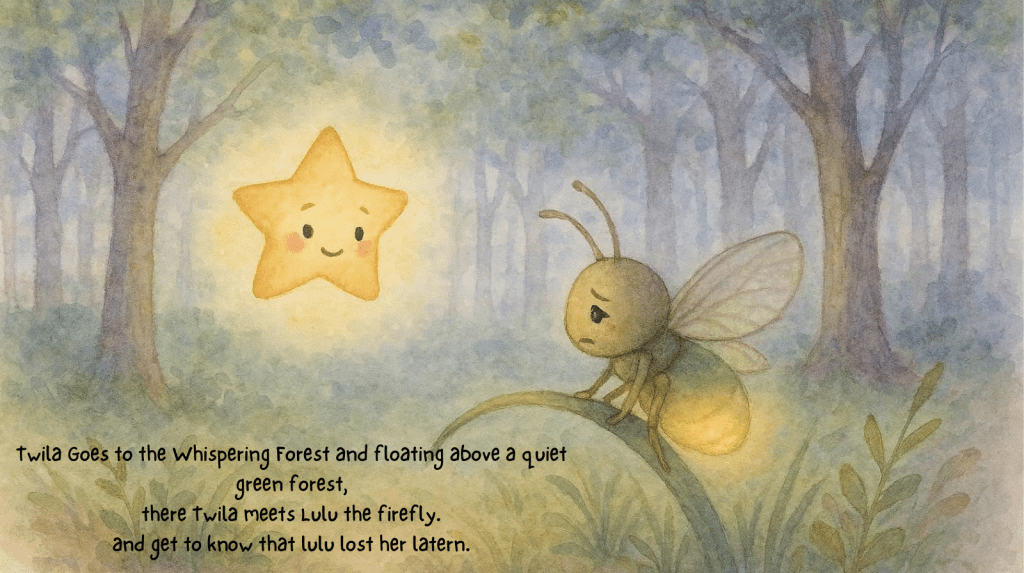
    So Twila drifted down to Earth, hoping to find her joy again. In the Whispering Forest, she met Lulu the firefly, who had lost her tiny lantern. Twila decided to help.

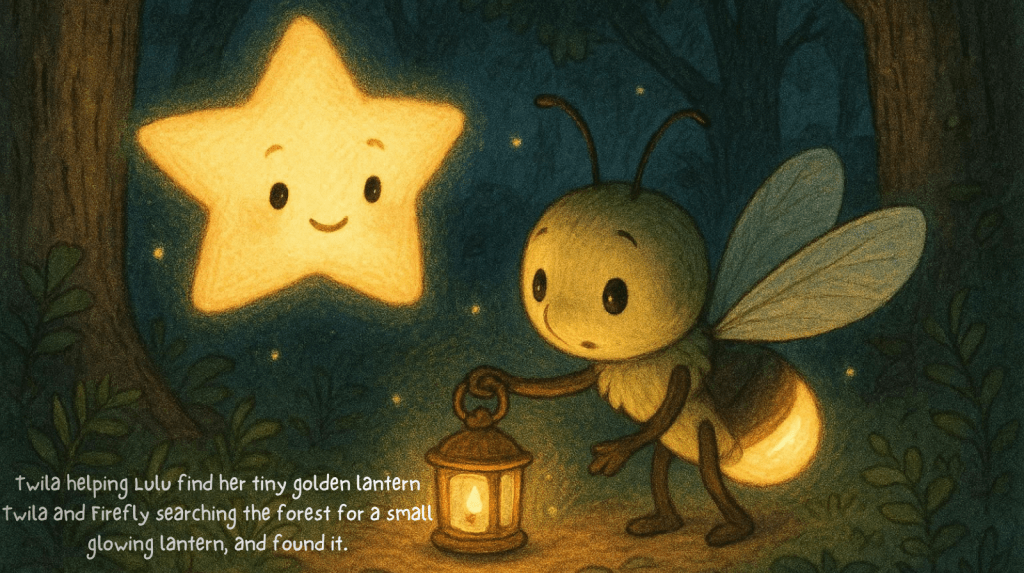
    Together, Twila and Lulu searched the quiet forest until they finally found the golden lantern glowing softly under a leaf. Lulu hugged it happily. Helping her made Twila’s edges warm again.

    The next evening, Twila played hide-and-seek with fluffy baby rabbits in a grassy field. Their cute little hops made her laugh until she sparkled faintly.

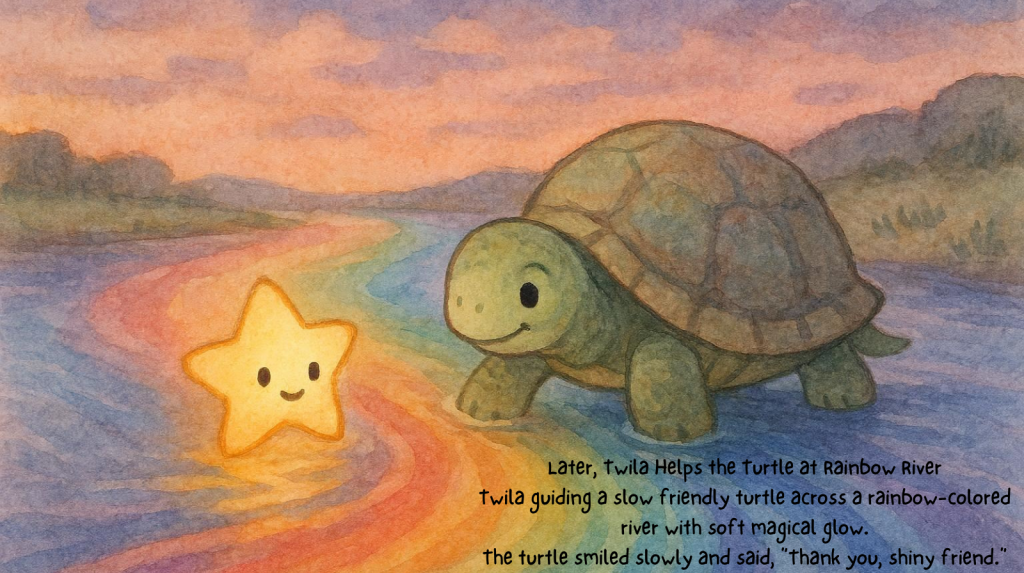
    Later, Twila glided to the Rainbow River, where she guided a gentle turtle across the shining water.
    “Thank you, bright friend,” the turtle said with a smile. Twila felt another little spark inside.

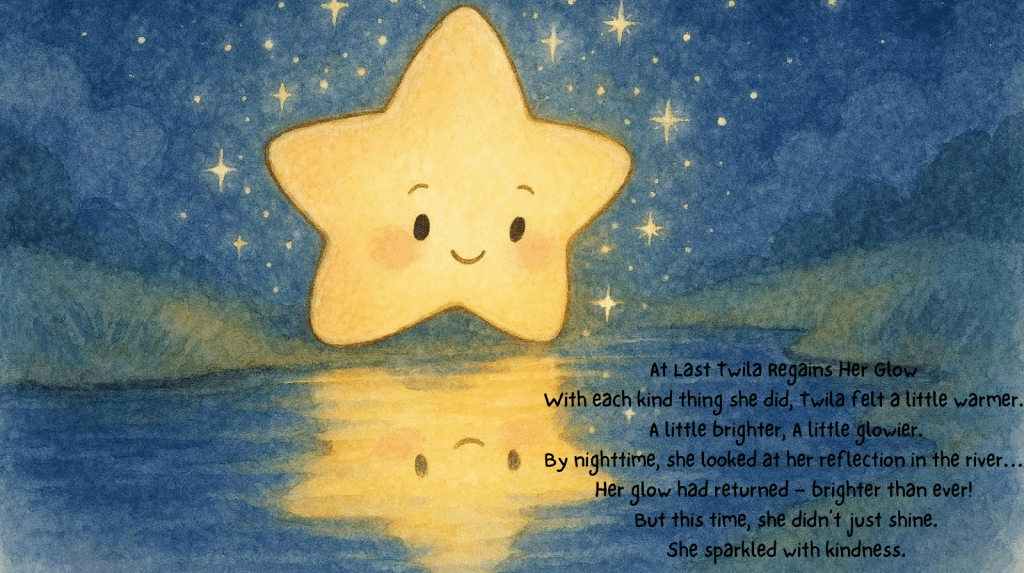
    With every kind thing she did, Twila grew warmer and brighter. That night, when she looked at her reflection in the river, she gasped—her glow had returned, stronger than ever!

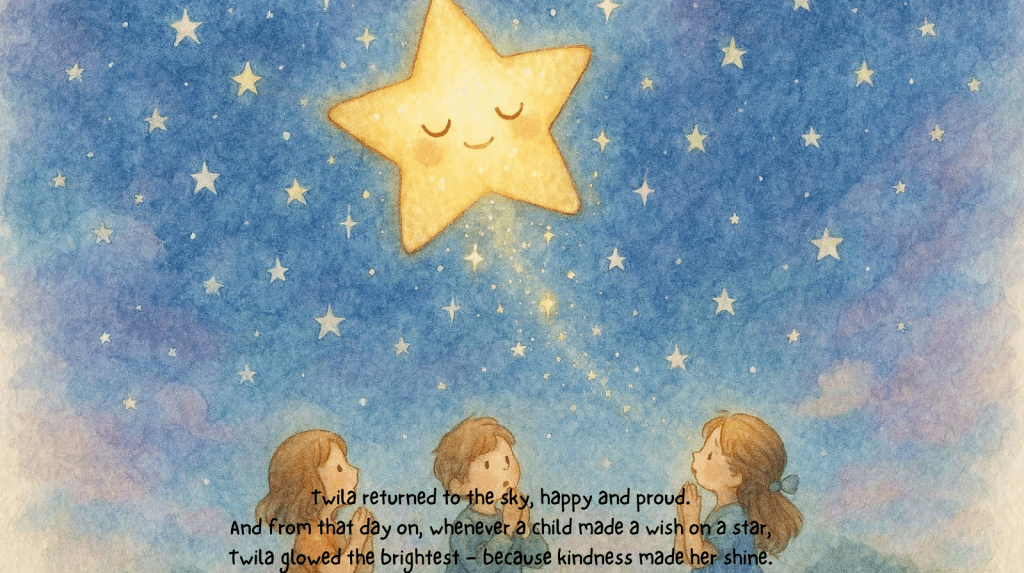
    Twila rose back into the sky, glowing joyfully. From that day on, whenever a child made a wish on a star, Twila shone the brightest.
    Because kindness had taught her how to shine again.