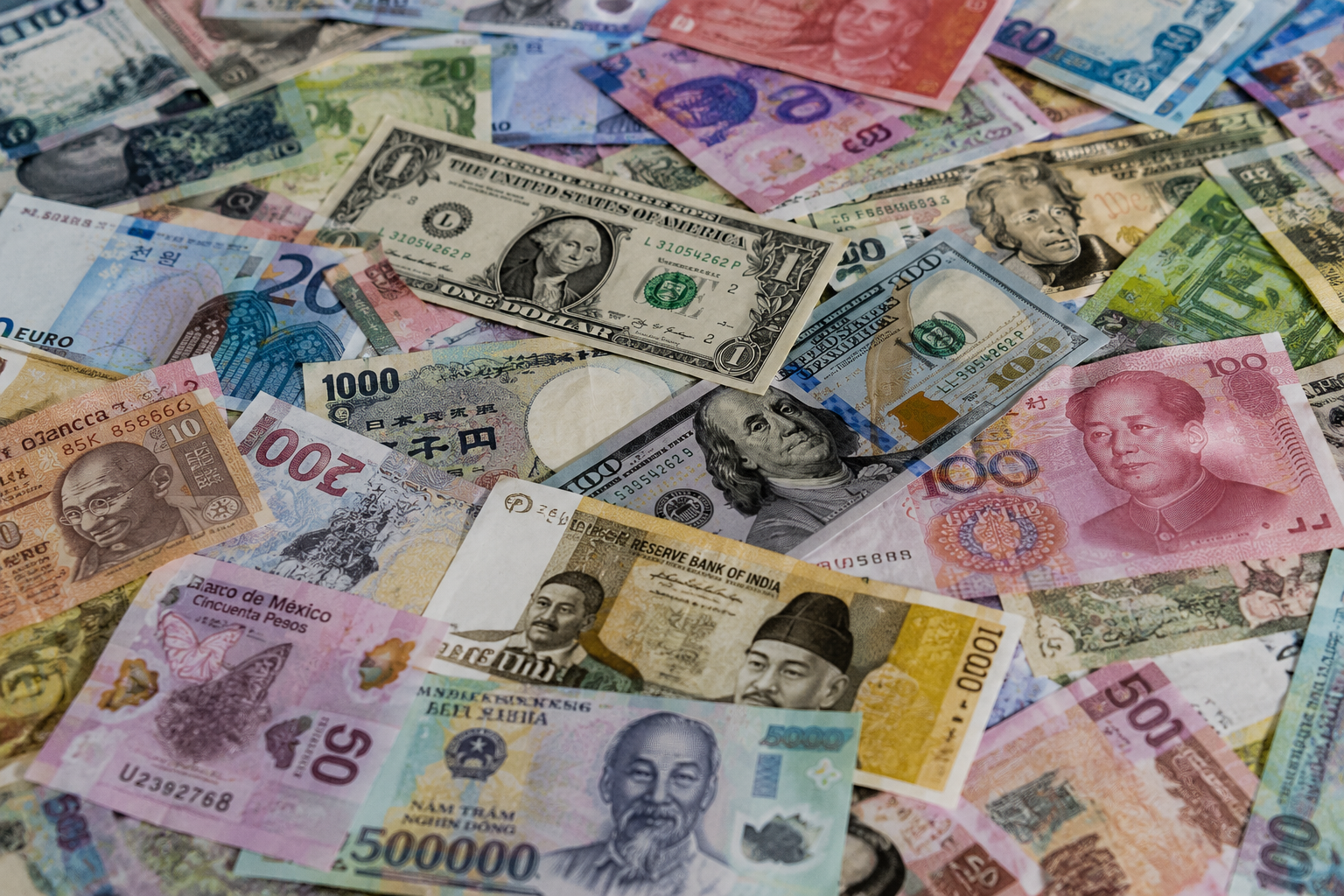
Money is not just paper 💵 — it’s trust, power, and global demand 🌍
🌍 Demand & Supply
More demand for a currency = stronger value 💪
Exports increase demand 📦
Global trade uses strong currencies
📉 Inflation Effect
Too much money printing reduces value 😵
Prices rise
Purchasing power drops
🏦 Interest Rates
Higher interest = more foreign investors 🌎
More investment → stronger currency
🏛️ Stability of Country
Stable governments = trusted currency 🛡️
Less risk = more value
🧠 Market Psychology
News & emotions move money fast ⚡
Fear → selling
Trust → buying
🤯 Crazy Facts
💵 US Dollar is used in global trade everywhere
🏆 Kuwaiti Dinar is stronger than USD
😱 Zimbabwe printed trillion-dollar notes
🌍 Euro is used by multiple countries
🪙 Some countries removed zeros to fix inflation
🌏 China vs India: The Real Story Behind Exports
In today’s global economy, two giants often get compared—China and India. Both have massive populations and growing economies. But when it comes to exports, the difference is huge—and fascinating.
🏭 The World’s Factory vs 💻 The World’s Office
China is known as the world’s factory. Most physical products you see globally are made there.
India is known as the world’s office, leading in IT services and outsourcing.
👉 China exports products
👉 India exports services
📦 What Do They Export?
🇨🇳 China:
Electronics 📱
Machinery ⚙️
Textiles 👕
Solar panels ☀️
🇮🇳 India:
IT services 💻
Pharmaceuticals 💊
Jewelry 💎
Petroleum products ⛽
📥 Why India Imports More?
India has a trade deficit because it imports:
Crude oil ⛽
Gold 💍
Electronics 📱
China also imports raw materials—but it converts them into finished goods and exports them at higher value.
⚖️ Trade Balance
🇨🇳 China → Trade Surplus 💰
🇮🇳 India → Trade Deficit 📉
🤯 Fun Fact
China exports in ONE DAY what India exports in MULTIPLE DAYS!
🚀 Is India Catching Up?
Yes! India is growing fast with initiatives like:
Make in India 🏭
Manufacturing growth 📈
Global supply chain expansion 🌍
🧠 Final Thought
China built factories. India built services.
Both paths are powerful—but very different.
The famous book Freakonomics shows that the world works in strange and surprising ways. Using data and economics, authors Steven D. Levitt and Stephen J. Dubner reveal hidden truths about everyday life.
💰Fact #1: Drug Dealers Often Live With Their Parents
Contrary to movies, many low-level drug dealers earn very little money. Because of this, many still live with their parents while hoping to climb the hierarchy.
🎓Fact #2: Some Teachers Cheated on Tests
In schools where teacher bonuses depended on student performance, researchers found suspicious answer patterns suggesting teachers changed answers.
🥋 Fact #3: Even Sumo Wrestlers Might Cheat
Data analysis of professional sumo matches suggested that some wrestlers intentionally lost matches to help another wrestler avoid demotion.
👶 Fact #4: Baby Names Don’t Decide Success
Parents spend time choosing unique names, but research shows family background and opportunities influence success much more.
📉 Fact #5: Crime Dropped for Unexpected Reasons
Crime rates in the United States dropped sharply in the 1990s. Some explanations were surprising and challenged traditional theories.
🧠 Fact #6: Incentives Control Behavior
One major idea in Freakonomics is that people respond strongly to incentives — money, rewards, reputation, or fear of punishment.
📊 Fact #7: Economics Explains Everyday Life
Economics can explain many surprising things: crime trends, parenting choices, sports behavior, and even social patterns.
🚀 Final Thought
The biggest message of Freakonomics is simple: the world is full of hidden patterns. When we look at data and incentives, we discover surprising truths about human behavior.
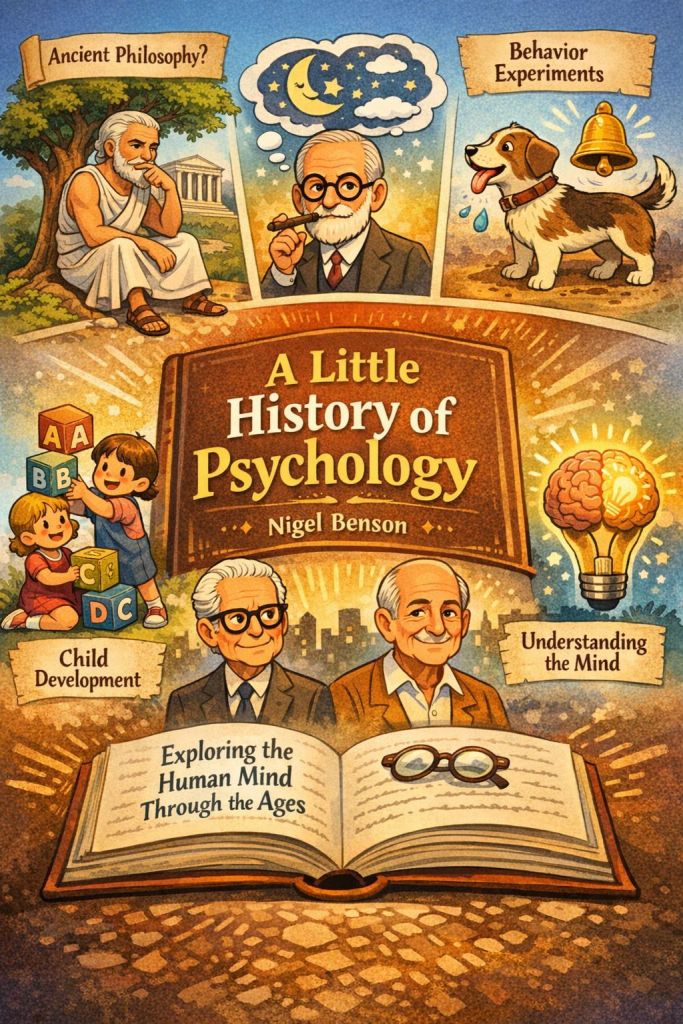
🧠 A Little History of Psychology — Understanding the Human Mind
Human behavior has always fascinated us. Why do we think the way we do? Why do emotions control many of our decisions? The book A Little History of Psychology explores these questions by tracing the development of psychology from ancient philosophy to modern science.
📚 About the Book
Written by Nigel Benson, this book presents psychology in a simple and engaging way. It explains how the study of the human mind evolved over centuries through the ideas of great thinkers and scientists.
Instead of complex academic explanations, the book uses stories, historical events, and famous experiments to make psychology easy to understand.
🌍 The Journey of Psychology
The book takes readers through the major milestones in psychology:
🏛️ Ancient philosophers asking questions about the mind and behavior
🧪 Early scientific experiments about memory and perception
🧠 The birth of modern psychology laboratories
💭 The study of unconscious thoughts and emotions
📊 Modern research into human behavior and decision-making
Through these stages, psychology slowly transformed from philosophy into a scientific discipline.
👨🔬 Famous Thinkers Featured
The book introduces many influential figures in psychology, including:
🧠 Sigmund Freud – Founder of psychoanalysis
🐶 Ivan Pavlov – Famous for classical conditioning experiments
🧪 B. F. Skinner – Pioneer of behaviorism
👶 Jean Piaget – Researcher on child development
🧑🤝🧑 Carl Rogers – Advocate of humanistic psychology
Each of these thinkers contributed new ideas about how humans think, feel, and behave.
💡 Why This Book Is Popular
📖 Easy to read for beginners
🧠 Explains complex ideas in simple language
📚 Covers the entire history of psychology
🌎 Shows how psychology affects everyday life
Whether you’re a student, reader, or simply curious about human behavior, this book provides a clear introduction to psychology.
🔥 Fun Fact
The word “psychology” comes from the Greek words psyche (soul or mind) and logos (study). Together they mean “the study of the mind.”
✨ Final Thought
Understanding psychology helps us understand people — and ourselves. Books like A Little History of Psychology show that the journey to understand the human mind has taken centuries, and it continues to evolve today.
🧠 “To understand the world, first understand the mind.”
Facts Around the World
Global wealth isn’t just about billionaires and skyscrapers — there are some truly mind-blowing facts! Did you know that a huge chunk of the world’s wealth is hidden offshore in secret accounts, trusts, and shell companies? Estimates suggest it could be anywhere from $5.6 trillion to $32 trillion! 🌍
💡 Fun & Surprising Facts
The richest 1% owns nearly half of all global wealth, while the bottom 50% collectively own barely 1.6%! 😲
Even though digital payments are booming, cash demand has grown globally over the last 20 years — people still love holding money! 💵
Most of the ultra-rich’s wealth isn’t cash — it’s tied up in stocks, companies, real estate, and rare collectibles like art and yachts. 🖼️🚤
The combined value of all gold ever mined (~$12 trillion) is smaller than the wealth of the top 10 richest people! 🥇
There’s more money in the world than there are goods — economists call this the “money illusion.” 💸
Some billionaires own entire islands or countries — yes, you can technically buy your own private nation! 🏝️
✨ Why This Matters
Knowing where money really is — who controls it and how it’s stored — helps us understand global power, markets, and economic trends. Whether it’s gold, cryptocurrencies, stocks, or hidden offshore wealth, following the money reveals the world’s hidden dynamics.
Ever said “I’m not going” and then watched your friends’ stories like a spy? Congratulations, you have FOMO — and you’re not alone. Let’s dive into the funniest examples!
📱 Example #1: “They Went Without Me?!”
You skip a party to save money and be “responsible”… then see everyone’s Instagram story 10 minutes later. Suddenly, your bed feels like betrayal. Your snack? Emotional support.
🎟️ Example #2: Group Chat Guilt
The gang plans a weekend trip. You say “maybe next time.” Now the group chat is full of memes, inside jokes, and pool selfies — and you’re just reacting with the 🥲 emoji.
👗 Example #3: The Sale That Got Away
You ignore a sale notification — “I don’t need anything.” Two hours later, your friend grabs that exact jacket you wanted… and it was 70% off. Now you’re just cold and full of regret.
🍕 Example #4: Food FOMO Is Real
Your friends go out for pizza. You’re stuck at home eating cereal. Then they post a cheesy slice on Stories with slow-motion mozzarella. You can literally hear your stomach cry.
🛒 Example #5: The “Only 1 Left in Stock” Trick
You’re not even sure you want the product. But suddenly the website says “Only 1 left!” and your finger is already hovering over the ‘Buy Now’ button. It’s not you. It’s FOMO shopping science.
“FOMO doesn’t mean you’re missing out — it means you’re wonderfully human, slightly dramatic, and definitely online too much.”
📤 Share this post if you’ve felt FOMO in the last 24 hours:
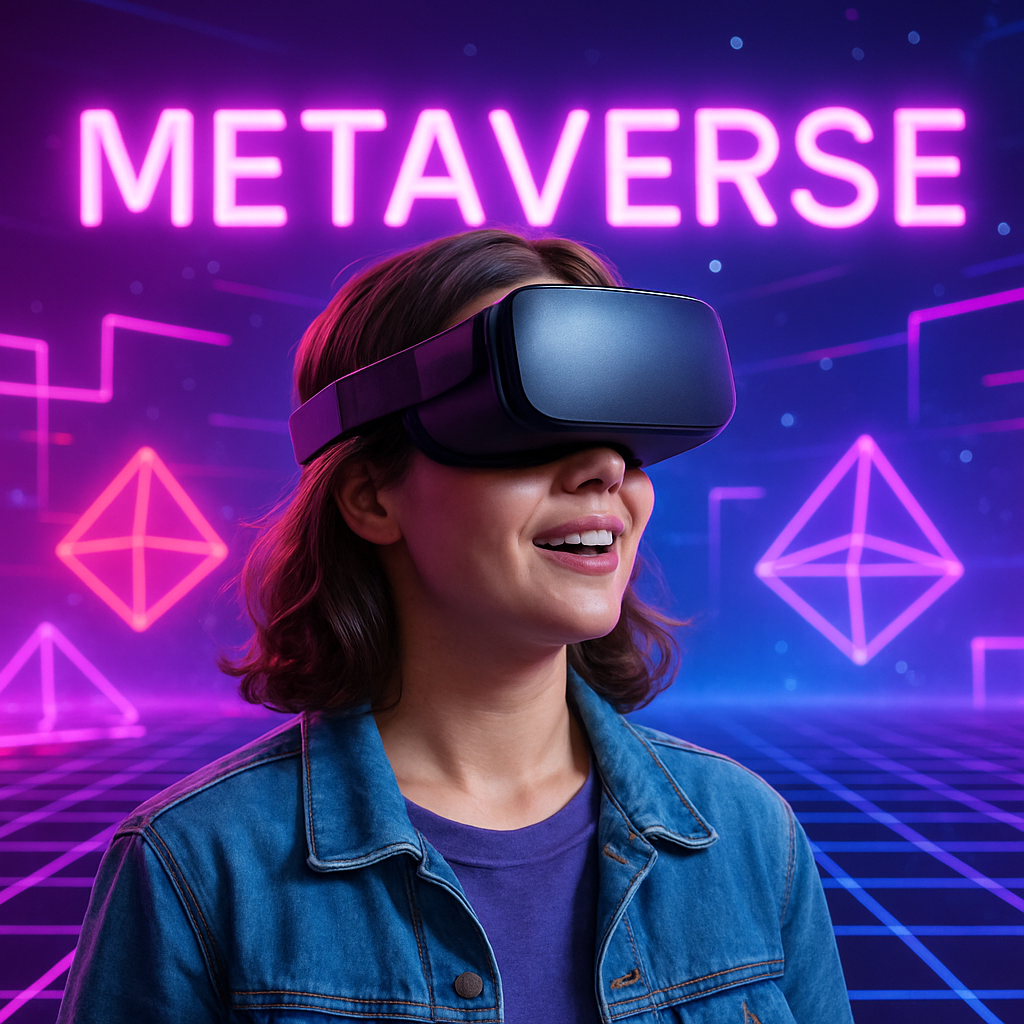
🧠 People Are Buying Virtual Land in the Metaverse — for Lakhs!
Yes, it’s real. Some people are spending lakhs (even crores!) to buy land that only exists in a virtual world — no bricks, no soil, just code and pixels. Welcome to the Metaverse, where digital real estate is the new luxury.
💡 Fascinating Facts
🔹 One virtual plot in The Sandbox sold for over ₹3.5 crore — next to rapper Snoop Dogg’s virtual mansion!
🔹 In Decentraland, a digital mall was sold for ₹7.2 crore, where brands now open virtual showrooms.
🔹 Big names like Adidas, Gucci, and Nike own digital land — not for fun, but for future business.
🔹 Virtual land is often bought as NFTs on the blockchain — making it secure and tradeable like crypto.
🔹 Some owners rent out their virtual plots — just like landlords in the real world — and earn real money!
🤔 But Why?
Because the Metaverse is becoming the next big thing — a place for:
🎮 Gaming
🎤 Events
🛍️ Shopping
👫 Social hangouts
💍 Even digital marriages!
⚠️ Reality Check
It’s still early days. Just like crypto, it’s a mix of high risk and high reward. Some buyers hit jackpots. Others are waiting for their big moment.
🚀 Final Thought:
In a world where people spend hours online, owning land in the Metaverse is the new frontier. It may sound wild today — but remember, people laughed at Bitcoin too.
The “black box” is actually bright orange in color, not black. This distinctive color helps investigators locate the boxes more easily in the aftermath of an accident, especially in wreckage or debris.
The bright orange coloration is a deliberate design choice to aid in:
Visibility: Making it easier to spot the boxes in wreckage or underwater.
Recovery: Facilitating the recovery of critical data for investigations.
So, while it’s called a “black box,” it’s actually a bright orange box!
There are two types of black boxes:
Flight Data Recorder (FDR): Records flight parameters like speed, altitude, and control surface positions.
Cockpit Voice Recorder (CVR): Captures conversations between pilots and other sounds in the cockpit.
Let’s compare returns on investments made in the 1990s:
Indian Stock Market (Sensex): 🚀 Potential returns: 15-20 times the initial investment!
Physical Gold: 💎 Potential returns: 5-7 times the initial investment!
Real Estate (Property): 🏠 Potential returns: 10-50 times the initial investment!
High-Yield Savings Account/Fixed Deposits: 🤑 Potential returns: 2-3 times the initial investment!
The Winner: Real Estate! 🏆
Investing in real estate in major Indian cities since the 1990s has generated the highest returns, with some properties appreciating 10-50 times their original value!








 Now or Never