Tag: #MoneyMindset #WealthMindset #RichHabits #FinancialDiscipline #AbundanceMindset

  • D2M soon…..


    D2M Technology Blog

    D2M Technology

    📡 D2M Technology

    The Future of Mobile Entertainment Without Internet 🚀

    🤔 What is D2M?

    D2M (Direct-to-Mobile) is a new technology that allows smartphones to receive video, audio, and emergency broadcasts directly without using internet data or Wi-Fi.

    📱 Think of your smartphone becoming a mini television receiver!

    ⚙️ How Does D2M Work?

    Instead of millions of people streaming separate videos online, one powerful broadcast signal sends content to everyone simultaneously.

    • 📡 TV towers broadcast signals
    • 📱 Smartphones receive signals directly
    • 🌐 No mobile data required
    • ⚡ Faster live streaming experience

    🔥 Why D2M is Important

    • 💰 Saves mobile data costs
    • 📶 Works in low-network areas
    • 🏏 Smooth cricket and sports streaming
    • 🚨 Emergency disaster alerts
    • 🌍 Helps rural regions access content
    • 📚 Educational broadcasts without internet

    🏗️ Countries Testing D2M

    Countries like India are actively testing D2M broadcasting technology.

    • 📺 Prasar Bharati
    • 🎓 IIT Kanpur
    • 📡 Telecom & broadcasting companies

    Future smartphones may include special D2M receiver chips.

    ⚠️ Challenges of D2M

    • 📱 Most phones don’t support D2M yet
    • 🔋 Battery optimization still improving
    • 📜 Governments need spectrum rules
    • 💼 Telecom companies may lose data revenue

    🤯 Fun Facts About D2M

    • 📺 Phones could stream TV without internet
    • 🏟️ Stadium fans may watch instant replays without lag
    • 🚨 Emergency alerts can reach millions instantly
    • 🌍 Rural villages may get free educational channels

    🔮 The Future of D2M

    D2M could transform smartphones into powerful broadcasting devices.

    Imagine watching live cricket, news, and emergency updates anywhere — even without internet access.

    📡 The future smartphone may also become your personal TV station.

    © 2026 D2M Technology Blog | Future Communication Revolution 🚀
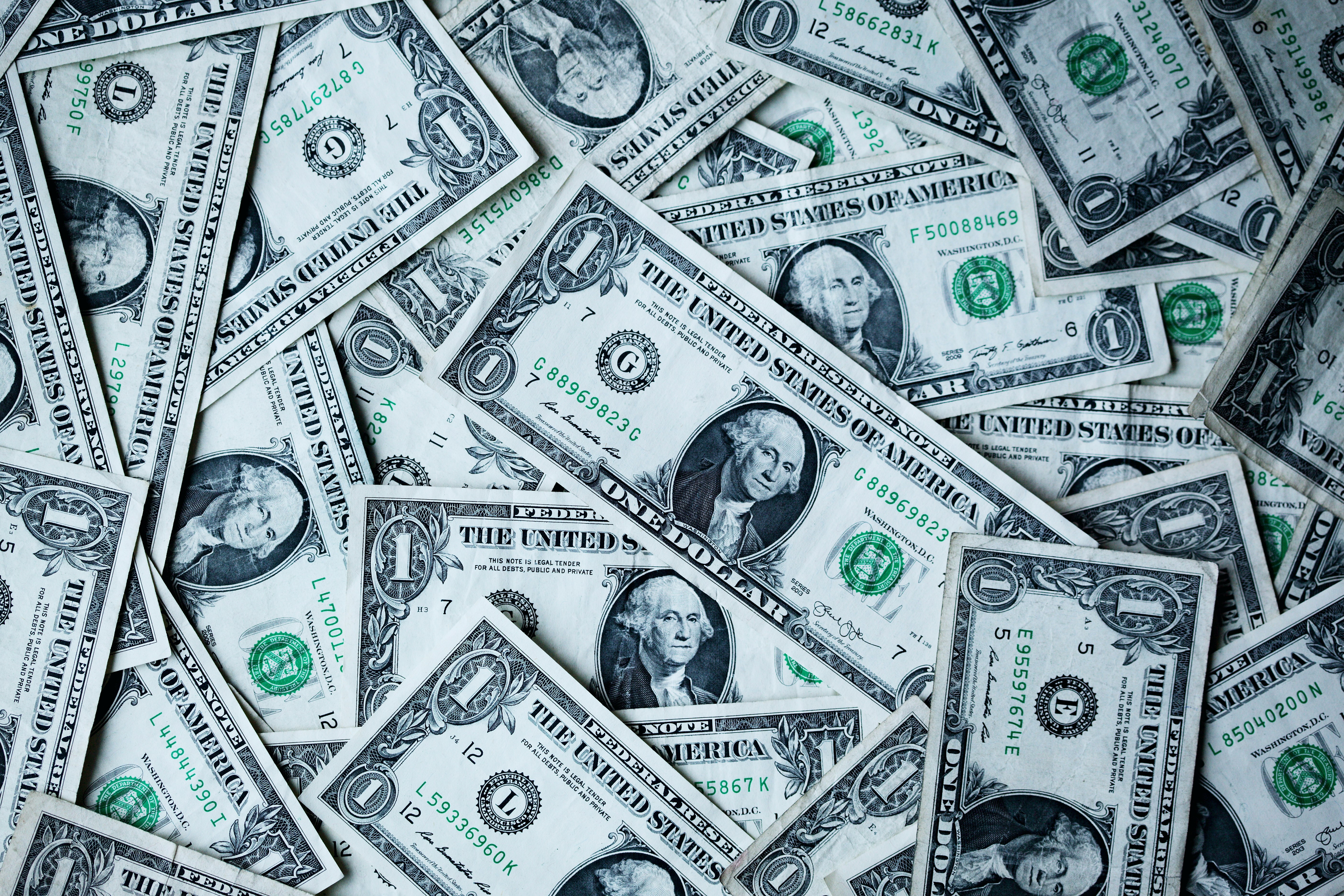
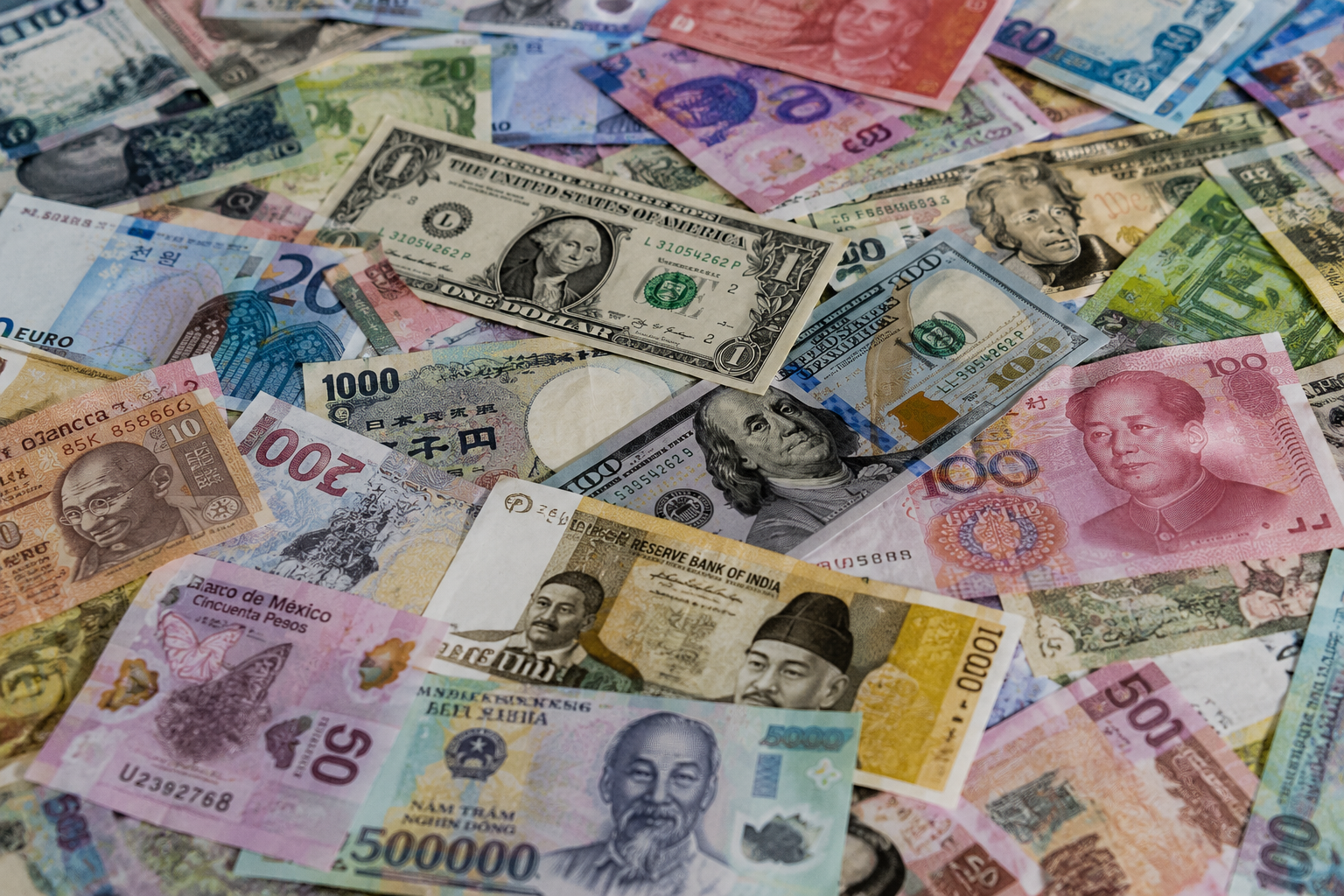
  • 💱 Why Do Different Countries Have Different Currency Values?

    Money is not just paper 💵 — it’s trust, power, and global demand 🌍

    🌍 Demand & Supply

    More demand for a currency = stronger value 💪

    • Exports increase demand 📦
    • Global trade uses strong currencies

    📉 Inflation Effect

    Too much money printing reduces value 😵

    • Prices rise
    • Purchasing power drops

    🏦 Interest Rates

    Higher interest = more foreign investors 🌎

    • More investment → stronger currency

    🏛️ Stability of Country

    Stable governments = trusted currency 🛡️

    • Less risk = more value

    🧠 Market Psychology

    News & emotions move money fast ⚡

    • Fear → selling
    • Trust → buying

    🤯 Crazy Facts

    • 💵 US Dollar is used in global trade everywhere
    • 🏆 Kuwaiti Dinar is stronger than USD
    • 😱 Zimbabwe printed trillion-dollar notes
    • 🌍 Euro is used by multiple countries
    • 🪙 Some countries removed zeros to fix inflation
  • 🌏 China vs India: The Real Story Behind Exports

    In today’s global economy, two giants often get compared—China and India. Both have massive populations and growing economies. But when it comes to exports, the difference is huge—and fascinating.

    🏭 The World’s Factory vs 💻 The World’s Office

    China is known as the world’s factory. Most physical products you see globally are made there.

    India is known as the world’s office, leading in IT services and outsourcing.

    • 👉 China exports products
    • 👉 India exports services

    📦 What Do They Export?

    🇨🇳 China:

    • Electronics 📱
    • Machinery ⚙️
    • Textiles 👕
    • Solar panels ☀️

    🇮🇳 India:

    • IT services 💻
    • Pharmaceuticals 💊
    • Jewelry 💎
    • Petroleum products ⛽

    📥 Why India Imports More?

    India has a trade deficit because it imports:

    • Crude oil ⛽
    • Gold 💍
    • Electronics 📱

    China also imports raw materials—but it converts them into finished goods and exports them at higher value.

    ⚖️ Trade Balance

    • 🇨🇳 China → Trade Surplus 💰
    • 🇮🇳 India → Trade Deficit 📉

    🤯 Fun Fact

    China exports in ONE DAY what India exports in MULTIPLE DAYS!

    🚀 Is India Catching Up?

    Yes! India is growing fast with initiatives like:

    • Make in India 🏭
    • Manufacturing growth 📈
    • Global supply chain expansion 🌍

    🧠 Final Thought

    China built factories. India built services.
    Both paths are powerful—but very different.

  • 🤯 7 Mind-BlowingFreakonomics Facts

    The famous book Freakonomics shows that the world works in strange and surprising ways. Using data and economics, authors Steven D. Levitt and Stephen J. Dubner reveal hidden truths about everyday life.

    💰Fact #1: Drug Dealers Often Live With Their Parents

    Contrary to movies, many low-level drug dealers earn very little money. Because of this, many still live with their parents while hoping to climb the hierarchy.

    🎓Fact #2: Some Teachers Cheated on Tests

    In schools where teacher bonuses depended on student performance, researchers found suspicious answer patterns suggesting teachers changed answers.

    🥋 Fact #3: Even Sumo Wrestlers Might Cheat

    Data analysis of professional sumo matches suggested that some wrestlers intentionally lost matches to help another wrestler avoid demotion.

    👶 Fact #4: Baby Names Don’t Decide Success

    Parents spend time choosing unique names, but research shows family background and opportunities influence success much more.

    📉 Fact #5: Crime Dropped for Unexpected Reasons

    Crime rates in the United States dropped sharply in the 1990s. Some explanations were surprising and challenged traditional theories.

    🧠 Fact #6: Incentives Control Behavior

    One major idea in Freakonomics is that people respond strongly to incentives — money, rewards, reputation, or fear of punishment.

    📊 Fact #7: Economics Explains Everyday Life

    Economics can explain many surprising things: crime trends, parenting choices, sports behavior, and even social patterns.

    🚀 Final Thought

    The biggest message of Freakonomics is simple: the world is full of hidden patterns. When we look at data and incentives, we discover surprising truths about human behavior.

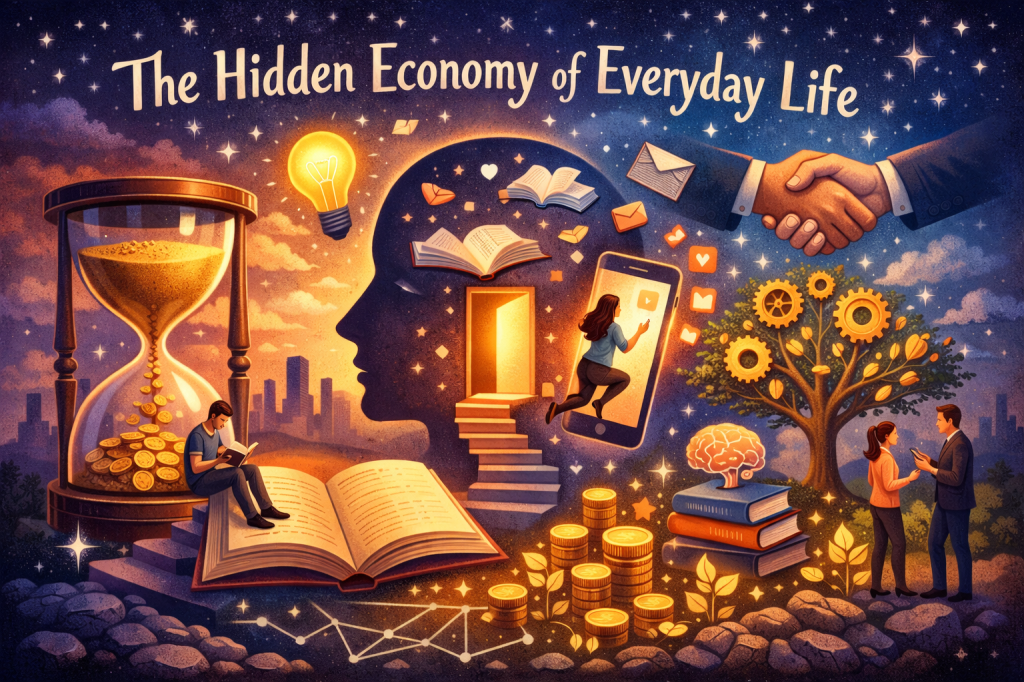
  • 🌌 The Hidden Economy of Everyday Life

    Not all wealth is money… some of it is invisible 👀

    ⏳ 1. Time is Your Real Currency

    We chase money, but spend time carelessly. Every hour you give to something is an investment—even scrolling 📱

    🧠 2. Attention is the New Gold

    Companies fight for your attention because it’s valuable. Where you focus daily shapes your future.

    🤝 3. Relationships = Hidden Wealth

    A good connection can open doors that money cannot. Networking is not just business—it’s life value.

    📚 4. Knowledge Compounds Like Money

    Learning one skill leads to another. Over time, knowledge creates opportunities you never expected 📈

    ⚡ 5. Energy is Limited

    Your daily energy decides productivity. Protect it like money—don’t waste it on things that don’t matter.

    🧠 Fun Insight

    • 📱 Social media platforms earn from your attention
    • 💡 One idea can be worth more than years of salary
    • 🤝 Strong relationships often create unexpected success

    ✨ Final Thought

    You are richer than you think. Your time, focus, and energy are assets. Use them wisely, and money will follow 💸

    Invest in what money can’t buy 💫

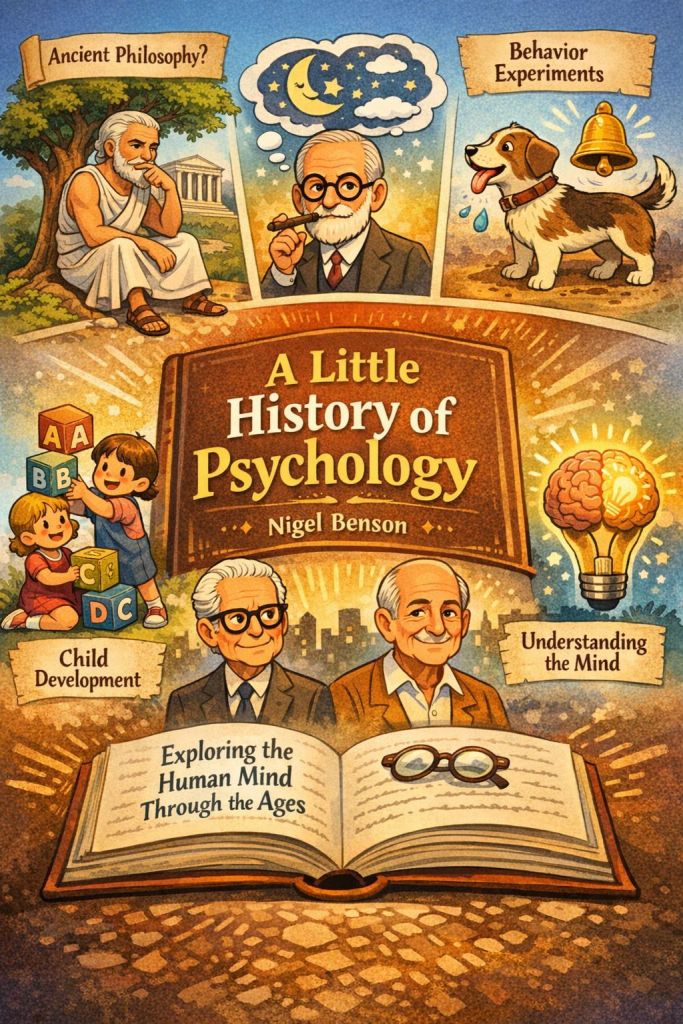
  • 🧠 A Little History of Psychology — Understanding the Human Mind

    Human behavior has always fascinated us. Why do we think the way we do? Why do emotions control many of our decisions? The book A Little History of Psychology explores these questions by tracing the development of psychology from ancient philosophy to modern science.

    📚 About the Book

    Written by Nigel Benson, this book presents psychology in a simple and engaging way. It explains how the study of the human mind evolved over centuries through the ideas of great thinkers and scientists.

    Instead of complex academic explanations, the book uses stories, historical events, and famous experiments to make psychology easy to understand.

    🌍 The Journey of Psychology

    The book takes readers through the major milestones in psychology:

    • 🏛️ Ancient philosophers asking questions about the mind and behavior
    • 🧪 Early scientific experiments about memory and perception
    • 🧠 The birth of modern psychology laboratories
    • 💭 The study of unconscious thoughts and emotions
    • 📊 Modern research into human behavior and decision-making

    Through these stages, psychology slowly transformed from philosophy into a scientific discipline.

    👨‍🔬 Famous Thinkers Featured

    The book introduces many influential figures in psychology, including:

    • 🧠 Sigmund Freud – Founder of psychoanalysis
    • 🐶 Ivan Pavlov – Famous for classical conditioning experiments
    • 🧪 B. F. Skinner – Pioneer of behaviorism
    • 👶 Jean Piaget – Researcher on child development
    • 🧑‍🤝‍🧑 Carl Rogers – Advocate of humanistic psychology

    Each of these thinkers contributed new ideas about how humans think, feel, and behave.

    💡 Why This Book Is Popular

    • 📖 Easy to read for beginners
    • 🧠 Explains complex ideas in simple language
    • 📚 Covers the entire history of psychology
    • 🌎 Shows how psychology affects everyday life

    Whether you’re a student, reader, or simply curious about human behavior, this book provides a clear introduction to psychology.

    🔥 Fun Fact

    The word “psychology” comes from the Greek words psyche (soul or mind) and logos (study). Together they mean “the study of the mind.”

    ✨ Final Thought

    Understanding psychology helps us understand people — and ourselves. Books like A Little History of Psychology show that the journey to understand the human mind has taken centuries, and it continues to evolve today.

    🧠 “To understand the world, first understand the mind.”

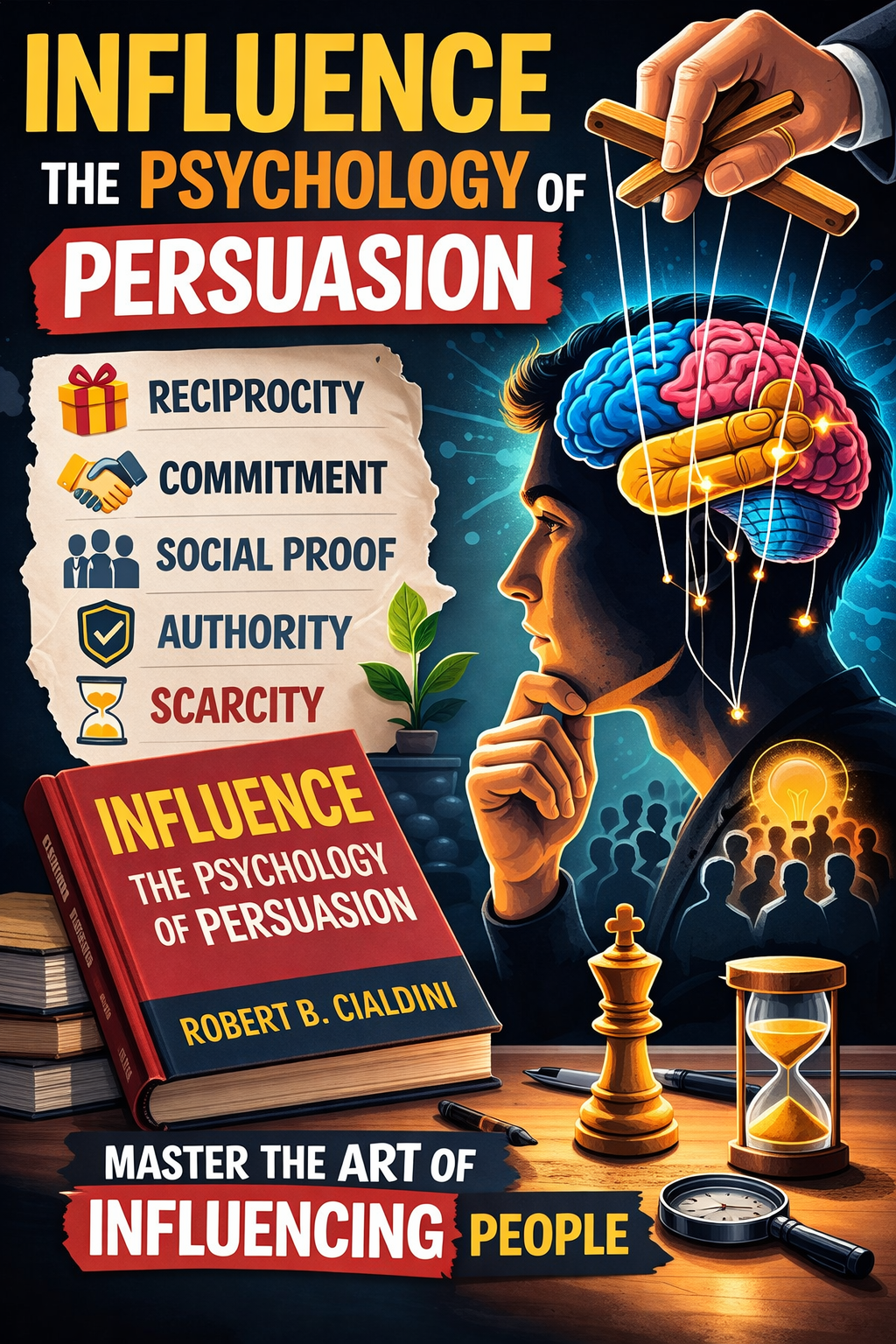
  • 🧠 Influence: The Psychology of Persuasion

    Why do people say “yes”? Why do we sometimes buy things we don’t really need?

    The famous book Influence: The Psychology of Persuasion explains the hidden psychology behind decision-making and persuasion.

    The author discovered that most persuasion techniques follow a few powerful psychological principles. These principles are used in marketing, negotiation, business, and everyday life.

    1️⃣ Reciprocity – People Return Favors

    When someone gives us something, we naturally feel the need to return the favor.

    • Free samples in supermarkets
    • Free trials from apps
    • Small gifts from brands

    These create a psychological pressure to give something back.

    2️⃣ Commitment & Consistency

    Once people commit to something, they want to stay consistent with that decision.

    • Signing a small petition
    • Agreeing to a small request
    • Public commitments

    Small commitments often lead to bigger decisions later.

    3️⃣ Social Proof – Following the Crowd

    People often look at what others are doing before making a decision.

    • Restaurant queues
    • Product reviews
    • Trending social media posts

    If many people choose something, we assume it must be good.

    4️⃣ Authority – Trusting Experts

    People tend to follow advice from experts, doctors, or professionals.

    • Doctors in advertisements
    • Financial experts on TV
    • Professional certifications

    5️⃣ Scarcity – Limited Means Valuable

    When something is rare or limited, people want it more.

    • “Only 3 items left!”
    • “Limited time offer”
    • “Flash sale today”

    Scarcity creates urgency and faster decisions.

    🤯 Fun Fact

    Many global companies use these persuasion principles in marketing campaigns.

    Even simple things like “best seller” labels are based on psychology.

    💡 Key Lesson

    Understanding persuasion helps you in two ways:

    • Become better at influencing others
    • Avoid being manipulated by marketing tricks

    When you understand influence, you understand how decisions are really made. 🧠

  • ⚡ The Power of Acting Fast

    Ever wondered why some people always seem to get the best opportunities? It’s simple:

    “The faster you act, the more you gain.”

    🚀 Why Acting Fast Matters

    • Opportunities vanish quickly: Did you know 70% of business deals fail because people hesitate too long?
    • Momentum creates success: Quick action builds confidence and leads to a chain of wins.
    • Confidence grows: Taking fast decisions trains your instincts for future opportunities.

    💡 Fun Facts About Speed & Success

    • Amazon’s Jeff Bezos: Believes in “Speed over perfection.” Many early decisions were rough but fast, leading to massive growth.
    • 🚀 NASA trivia: During Apollo 13, quick thinking and fast action saved the astronauts’ lives.
    • 📈 Stock market fact: Traders who act within the first few seconds of breaking news often make significantly higher gains.

    🔥 Tips to Be Fast Without Losing Quality

    1. Prioritize important tasks first and act immediately.
    2. Trust your knowledge and avoid overthinking.
    3. Break big tasks into smaller steps for quicker wins.
    4. Learn from mistakes fast and move forward confidently.

    “Speed plus focus is a game-changer. Move fast, see more, and gain more!” ⚡

  • 🏰 Did you know Moats!

    A moat is like a castle’s shield for your business — it keeps competitors out and profits safe! Here are some fun facts you might not know:

    💡 Did You Know?

    • 🟢 Apple’s brand moat: People camp outside stores for new products — that’s loyalty in action!
    • 💰 Walmart’s cost advantage: They sell over 1 billion products weekly worldwide!
    • 🌐 Network effect: Facebook has 3+ billion monthly users — the more people join, the stronger it gets.
    • 🔒 Switching costs: Companies using Microsoft Office are reluctant to switch; it saves them months of training.
    • 🧠 Patents protect Tesla: Their electric car tech has over 1,500 patents worldwide.
    • 📦 Amazon’s logistics moat: Their advanced warehouse network allows same-day delivery — competitors can’t match the speed easily.
    • 🖥️ Google’s search moat: Over 90% of people trust Google search results, making it extremely hard for rivals to take market share.
    • 🎵 Spotify’s playlist moat: Personalized playlists keep users hooked, making it difficult for competitors to lure them away.
    • 🏦 Visa & Mastercard’s network: Billions of transactions worldwide create a digital payments moat — new entrants struggle to gain trust.
    • 🛡️ Coca-Cola’s secret formula: The famous recipe is an intellectual property moat that has lasted over 130 years!

    🏰 Build your moat, protect your profits, and make business fun! 🚀

  • Facts Around the World

    Global wealth isn’t just about billionaires and skyscrapers — there are some truly mind-blowing facts! Did you know that a huge chunk of the world’s wealth is hidden offshore in secret accounts, trusts, and shell companies? Estimates suggest it could be anywhere from $5.6 trillion to $32 trillion! 🌍

    💡 Fun & Surprising Facts

    • The richest 1% owns nearly half of all global wealth, while the bottom 50% collectively own barely 1.6%! 😲
    • Even though digital payments are booming, cash demand has grown globally over the last 20 years — people still love holding money! 💵
    • Most of the ultra-rich’s wealth isn’t cash — it’s tied up in stocks, companies, real estate, and rare collectibles like art and yachts. 🖼️🚤
    • The combined value of all gold ever mined (~$12 trillion) is smaller than the wealth of the top 10 richest people! 🥇
    • There’s more money in the world than there are goods — economists call this the “money illusion.” 💸
    • Some billionaires own entire islands or countries — yes, you can technically buy your own private nation! 🏝️

    ✨ Why This Matters

    Knowing where money really is — who controls it and how it’s stored — helps us understand global power, markets, and economic trends. Whether it’s gold, cryptocurrencies, stocks, or hidden offshore wealth, following the money reveals the world’s hidden dynamics.