Not all wealth is money… some of it is invisible 👀
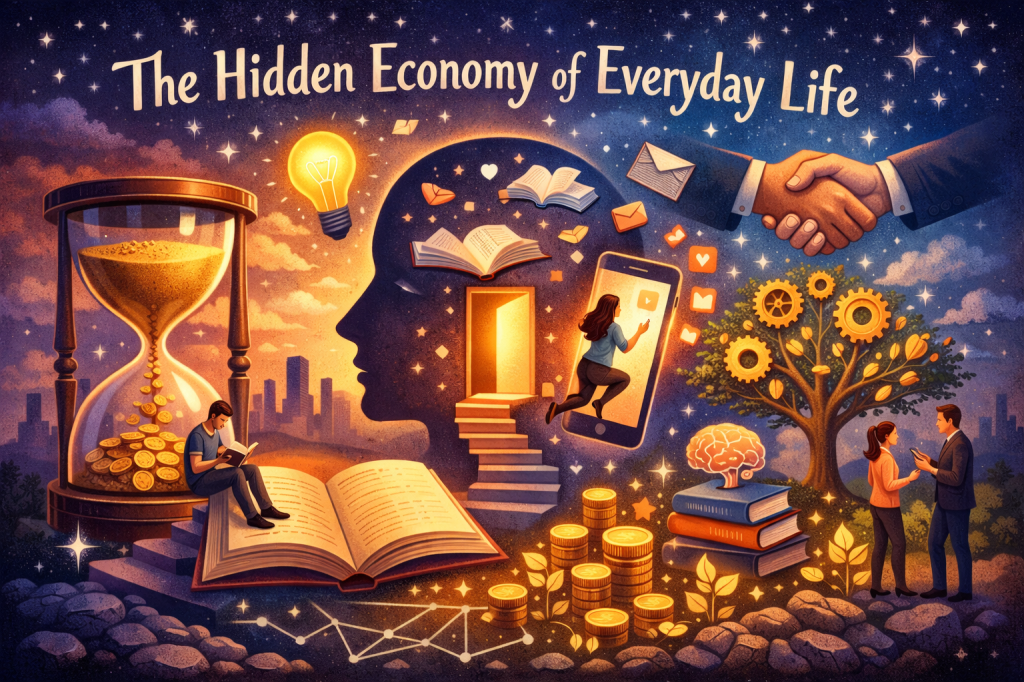
⏳ 1. Time is Your Real Currency
We chase money, but spend time carelessly. Every hour you give to something is an investment—even scrolling 📱
🧠 2. Attention is the New Gold
Companies fight for your attention because it’s valuable. Where you focus daily shapes your future.
🤝 3. Relationships = Hidden Wealth
A good connection can open doors that money cannot. Networking is not just business—it’s life value.
📚 4. Knowledge Compounds Like Money
Learning one skill leads to another. Over time, knowledge creates opportunities you never expected 📈
⚡ 5. Energy is Limited
Your daily energy decides productivity. Protect it like money—don’t waste it on things that don’t matter.
🧠 Fun Insight
📱 Social media platforms earn from your attention
💡 One idea can be worth more than years of salary
🤝 Strong relationships often create unexpected success
✨ Final Thought
You are richer than you think. Your time, focus, and energy are assets. Use them wisely, and money will follow 💸
Invest in what money can’t buy 💫
🧠 A Little History of Psychology — Understanding the Human Mind
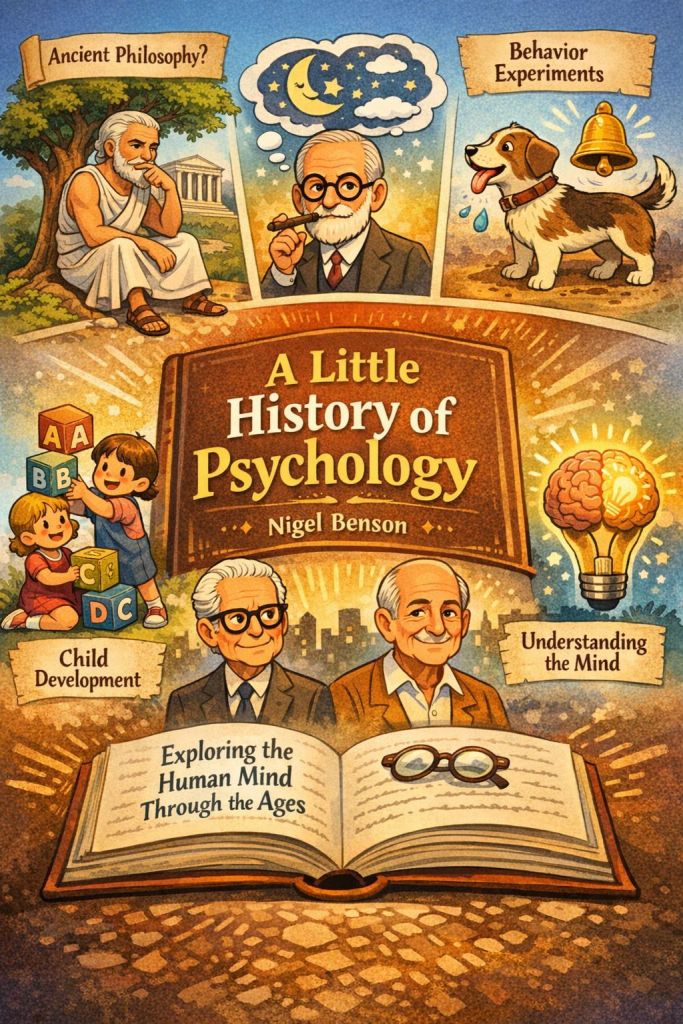
Human behavior has always fascinated us. Why do we think the way we do? Why do emotions control many of our decisions? The book A Little History of Psychology explores these questions by tracing the development of psychology from ancient philosophy to modern science.
📚 About the Book
Written by Nigel Benson, this book presents psychology in a simple and engaging way. It explains how the study of the human mind evolved over centuries through the ideas of great thinkers and scientists.
Instead of complex academic explanations, the book uses stories, historical events, and famous experiments to make psychology easy to understand.
🌍 The Journey of Psychology
The book takes readers through the major milestones in psychology:
🏛️ Ancient philosophers asking questions about the mind and behavior
🧪 Early scientific experiments about memory and perception
🧠 The birth of modern psychology laboratories
💭 The study of unconscious thoughts and emotions
📊 Modern research into human behavior and decision-making
Through these stages, psychology slowly transformed from philosophy into a scientific discipline.
👨🔬 Famous Thinkers Featured
The book introduces many influential figures in psychology, including:
🧠 Sigmund Freud – Founder of psychoanalysis
🐶 Ivan Pavlov – Famous for classical conditioning experiments
🧪 B. F. Skinner – Pioneer of behaviorism
👶 Jean Piaget – Researcher on child development
🧑🤝🧑 Carl Rogers – Advocate of humanistic psychology
Each of these thinkers contributed new ideas about how humans think, feel, and behave.
💡 Why This Book Is Popular
📖 Easy to read for beginners
🧠 Explains complex ideas in simple language
📚 Covers the entire history of psychology
🌎 Shows how psychology affects everyday life
Whether you’re a student, reader, or simply curious about human behavior, this book provides a clear introduction to psychology.
🔥 Fun Fact
The word “psychology” comes from the Greek words psyche (soul or mind) and logos (study). Together they mean “the study of the mind.”
✨ Final Thought
Understanding psychology helps us understand people — and ourselves. Books like A Little History of Psychology show that the journey to understand the human mind has taken centuries, and it continues to evolve today.
🧠 “To understand the world, first understand the mind.”
🧠 Influence: The Psychology of Persuasion
Why do people say “yes”? Why do we sometimes buy things we don’t really need?
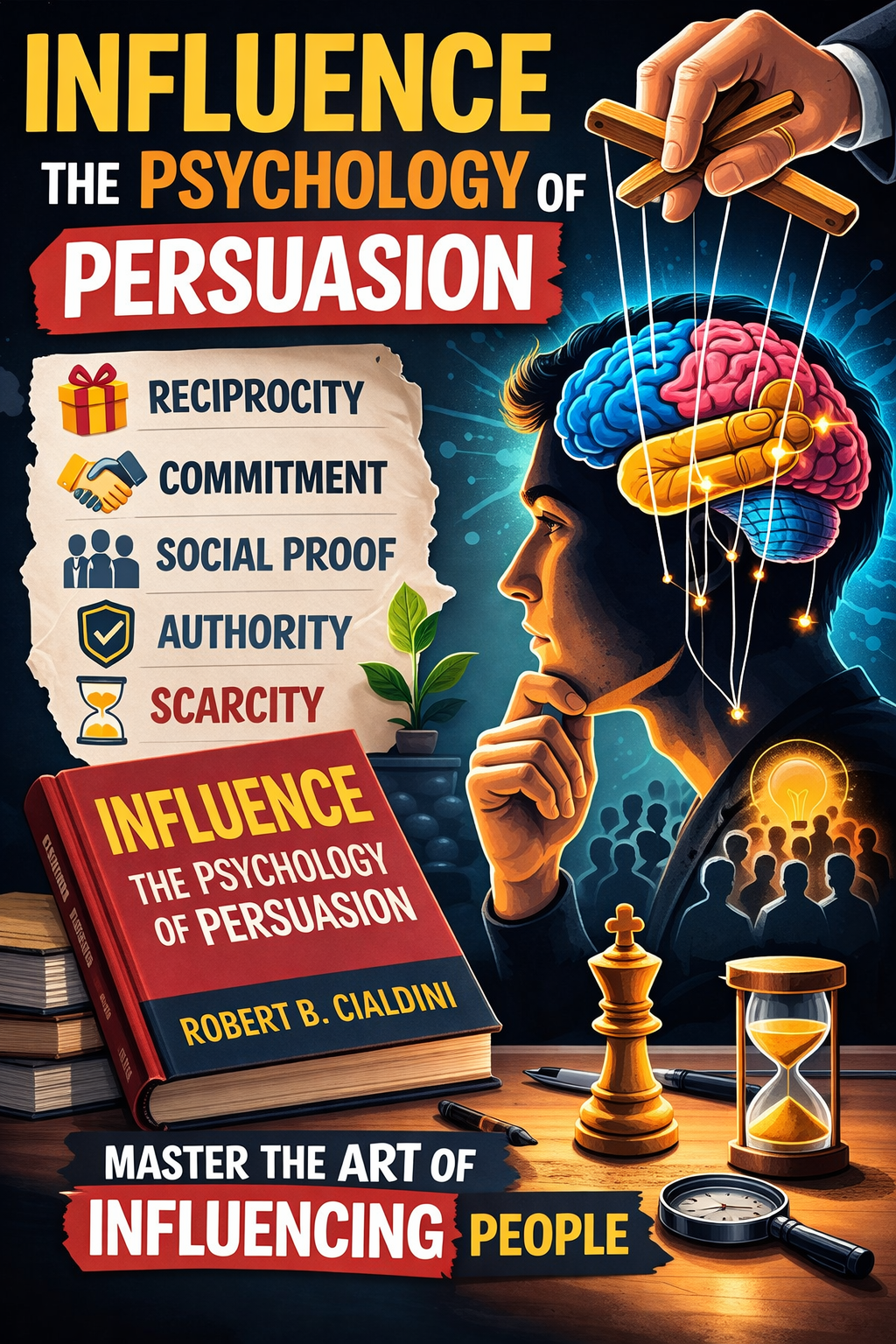
The famous book Influence: The Psychology of Persuasion explains the hidden psychology behind decision-making and persuasion.
The author discovered that most persuasion techniques follow a few powerful psychological principles. These principles are used in marketing, negotiation, business, and everyday life.
1️⃣ Reciprocity – People Return Favors
When someone gives us something, we naturally feel the need to return the favor.
Free samples in supermarkets
Free trials from apps
Small gifts from brands
These create a psychological pressure to give something back.
2️⃣ Commitment & Consistency
Once people commit to something, they want to stay consistent with that decision.
Signing a small petition
Agreeing to a small request
Public commitments
Small commitments often lead to bigger decisions later.
3️⃣ Social Proof – Following the Crowd
People often look at what others are doing before making a decision.
Restaurant queues
Product reviews
Trending social media posts
If many people choose something, we assume it must be good.
4️⃣ Authority – Trusting Experts
People tend to follow advice from experts, doctors, or professionals.
Doctors in advertisements
Financial experts on TV
Professional certifications
5️⃣ Scarcity – Limited Means Valuable
When something is rare or limited, people want it more.
“Only 3 items left!”
“Limited time offer”
“Flash sale today”
Scarcity creates urgency and faster decisions.
🤯 Fun Fact
Many global companies use these persuasion principles in marketing campaigns.
Even simple things like “best seller” labels are based on psychology.
💡 Key Lesson
Understanding persuasion helps you in two ways:
Become better at influencing others
Avoid being manipulated by marketing tricks
When you understand influence, you understand how decisions are really made. 🧠

 Now or Never