🧠 Influence: The Psychology of Persuasion
Why do people say “yes”? Why do we sometimes buy things we don’t really need?
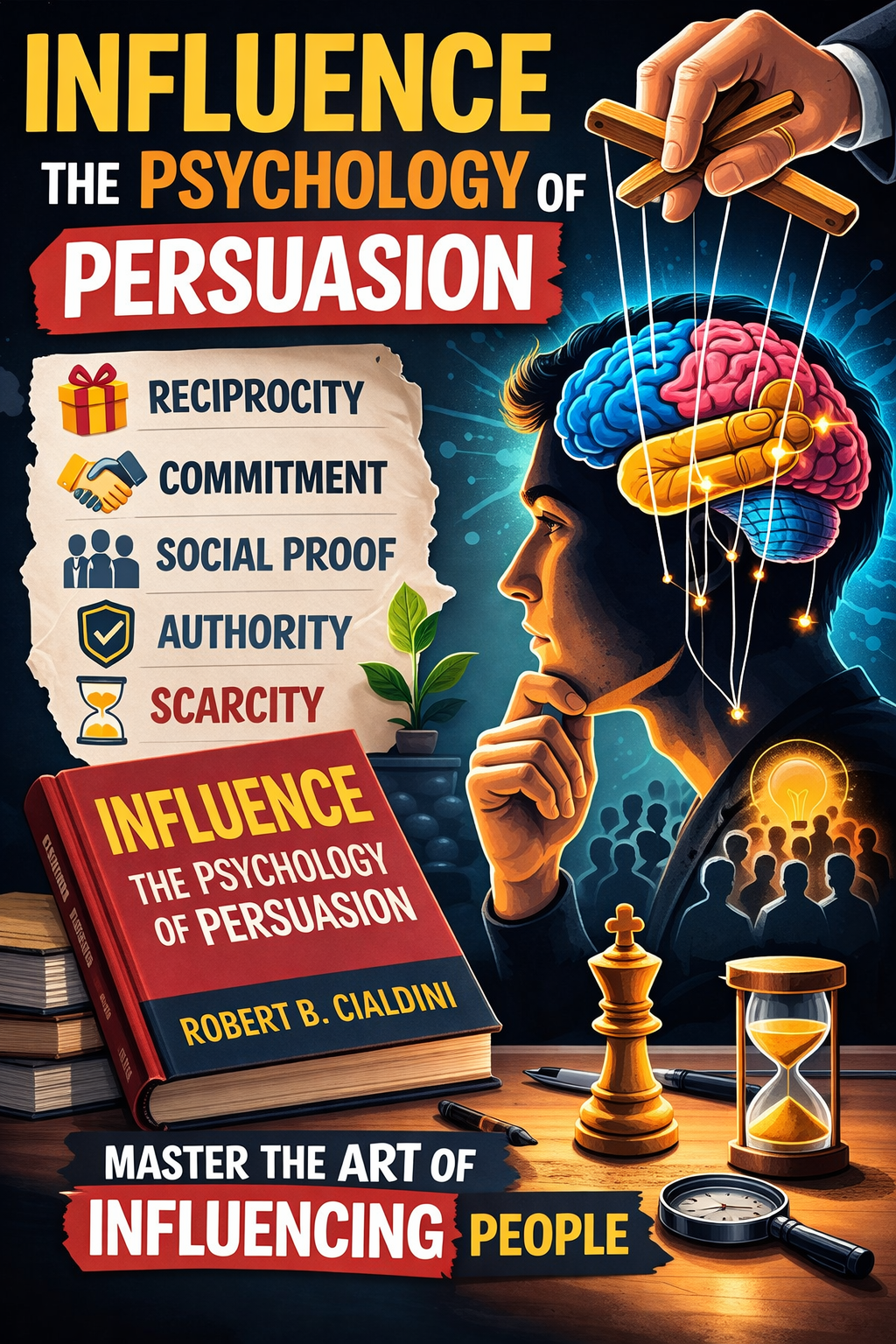
The famous book Influence: The Psychology of Persuasion explains the hidden psychology behind decision-making and persuasion.
The author discovered that most persuasion techniques follow a few powerful psychological principles. These principles are used in marketing, negotiation, business, and everyday life.
1️⃣ Reciprocity – People Return Favors
When someone gives us something, we naturally feel the need to return the favor.
- Free samples in supermarkets
- Free trials from apps
- Small gifts from brands
These create a psychological pressure to give something back.
2️⃣ Commitment & Consistency
Once people commit to something, they want to stay consistent with that decision.
- Signing a small petition
- Agreeing to a small request
- Public commitments
Small commitments often lead to bigger decisions later.
3️⃣ Social Proof – Following the Crowd
People often look at what others are doing before making a decision.
- Restaurant queues
- Product reviews
- Trending social media posts
If many people choose something, we assume it must be good.
4️⃣ Authority – Trusting Experts
People tend to follow advice from experts, doctors, or professionals.
- Doctors in advertisements
- Financial experts on TV
- Professional certifications
5️⃣ Scarcity – Limited Means Valuable
When something is rare or limited, people want it more.
- “Only 3 items left!”
- “Limited time offer”
- “Flash sale today”
Scarcity creates urgency and faster decisions.
🤯 Fun Fact
Many global companies use these persuasion principles in marketing campaigns.
Even simple things like “best seller” labels are based on psychology.
💡 Key Lesson
Understanding persuasion helps you in two ways:
- Become better at influencing others
- Avoid being manipulated by marketing tricks
When you understand influence, you understand how decisions are really made. 🧠
 Now or Never
Leave a comment